Palacio de Congresos de Elche
Cultural · Elche, ES
INTERNATIONAL DESIGN COMPETITION
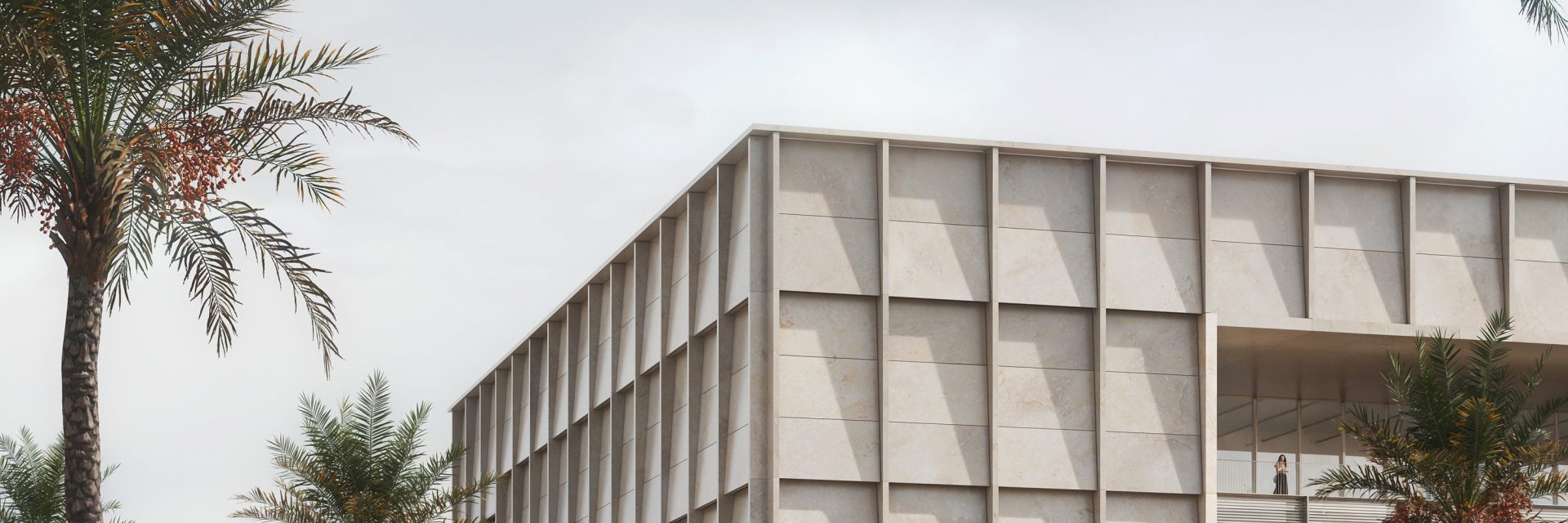
The proposal for the new Palacio de Congresos de Elche is conceived as an introspective and civic architecture, shaped by the Mediterranean
climate and the cultural landscape of the city. A protective envelope creates stable and comfortable interior conditions, while two large interior
voids—designed as public plazas—form the social and spatial heart of the building. Inspired by the Roman domus and the enclosed gardens
of the Palmeral, these spaces reinterpret the void as a place of encounter, climatic regulation, and collective life. The building is deliberately
set back from the plot boundaries, generating landscaped thresholds that enhance urban permeability and dialogue with the surroundings.
Open, accessible, and integrated, the project establishes a strong civic presence rooted in place.

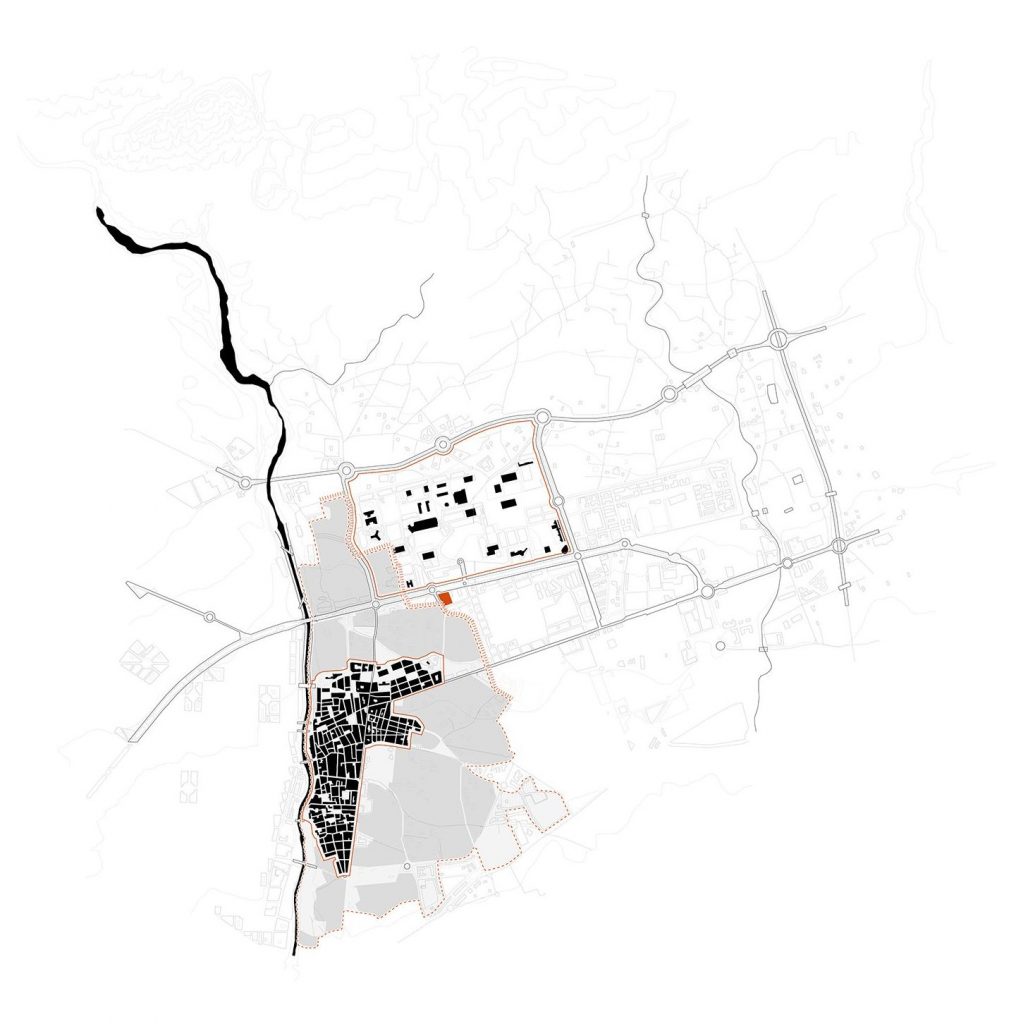
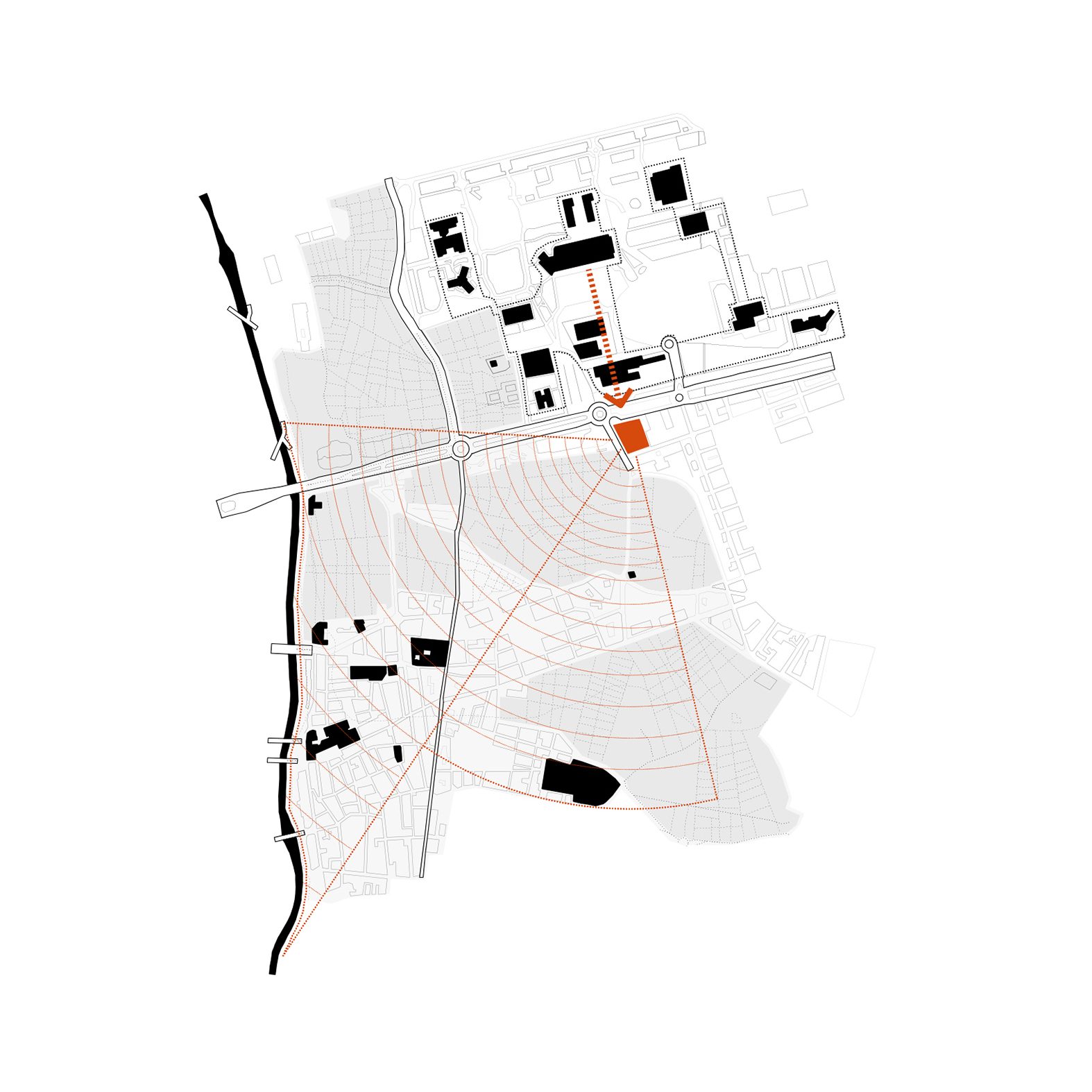
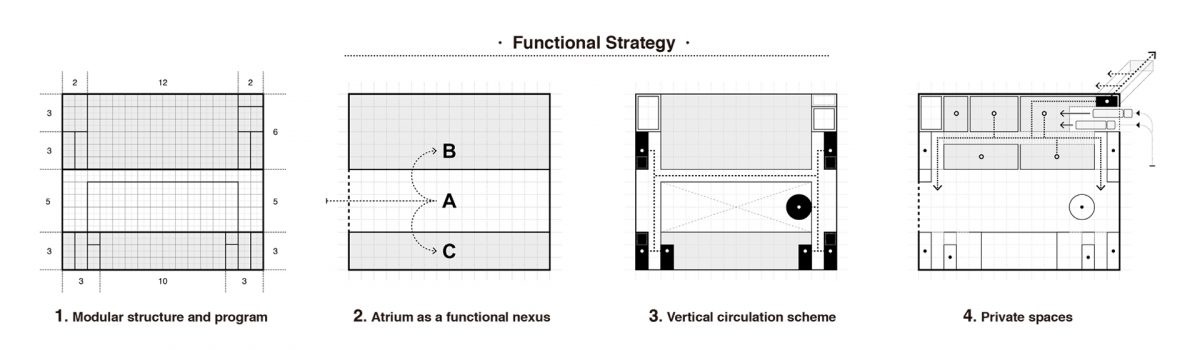
The proposal for the new Palacio de Congresos de Elche is structured around two essential typological strategies, both deeply rooted in the specific conditions of the site and in the programmatic requirements of the project. On the one hand, it addresses the inevitable climatic reality of the Mediterranean context through an introspective architectural response: the building is enveloped in a protective skin, conceived to generate a controlled, comfortable, and stable interior environment, both in thermal and lighting terms. On the other hand, a central role is assigned to void space as an element of articulation and encounter, through the creation of two large interior realms conceived as public squares, operating as nodes of circulation, social exchange, and visual connection.
This strategy goes beyond purely functional considerations to engage a symbolic and cultural dimension that dialogues with the historical spatial logics of Elche. The proposal draws inspiration from two fundamental vernacular archetypes: the Roman domus, where the central atrium—a contained and organizing void—structured domestic life; and the Islamic garden of the Palmeral of Elche, defined by an orthogonal parceling bounded by rammed-earth walls, within which vegetation generates a microclimate, producing and enabling a habitable space. Both models share an active and functional understanding of the void as an element that generates relationships, regulates climate, and catalyzes social interaction.
The Void as a Place of Encounter
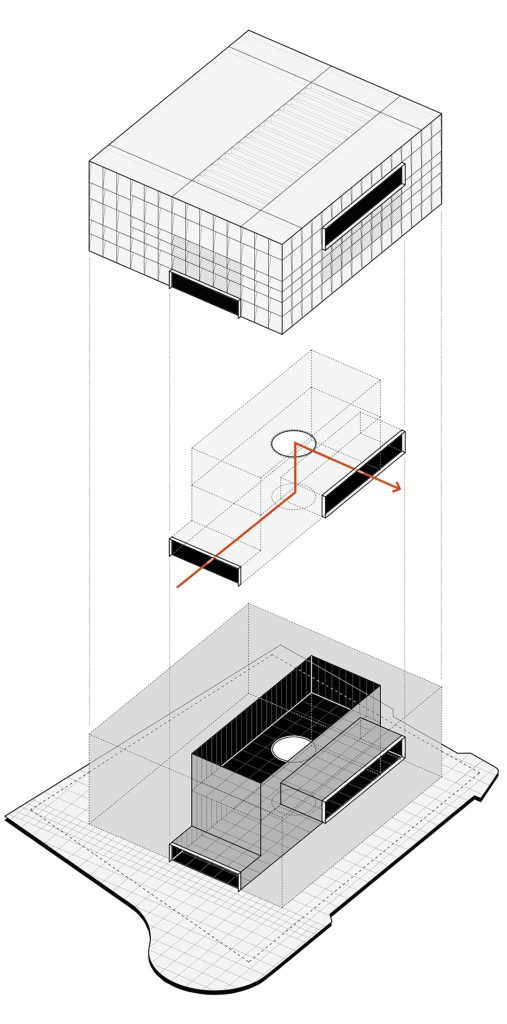
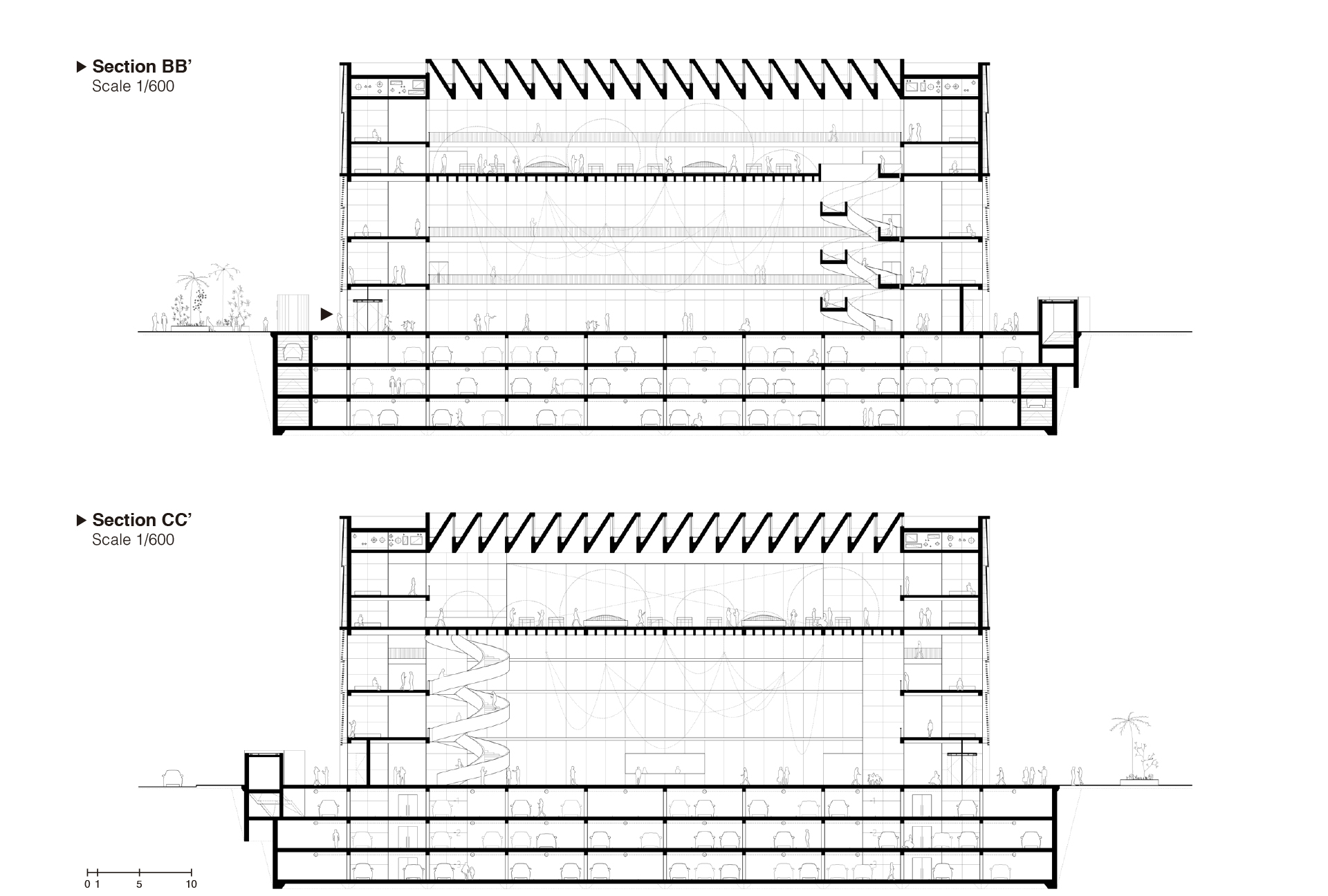
At the heart of the project lie the two interior public plazas and the vertical circulation system that connects them. These spaces are conceived as realms of architectural hospitality, able to accommodate diverse uses and to allow for multiple forms of collective appropriation. In this sense, the void is understood as a place of encounter that, paraphrasing Bachelard, rather than negating, convenes; and rather than excluding, welcomes.
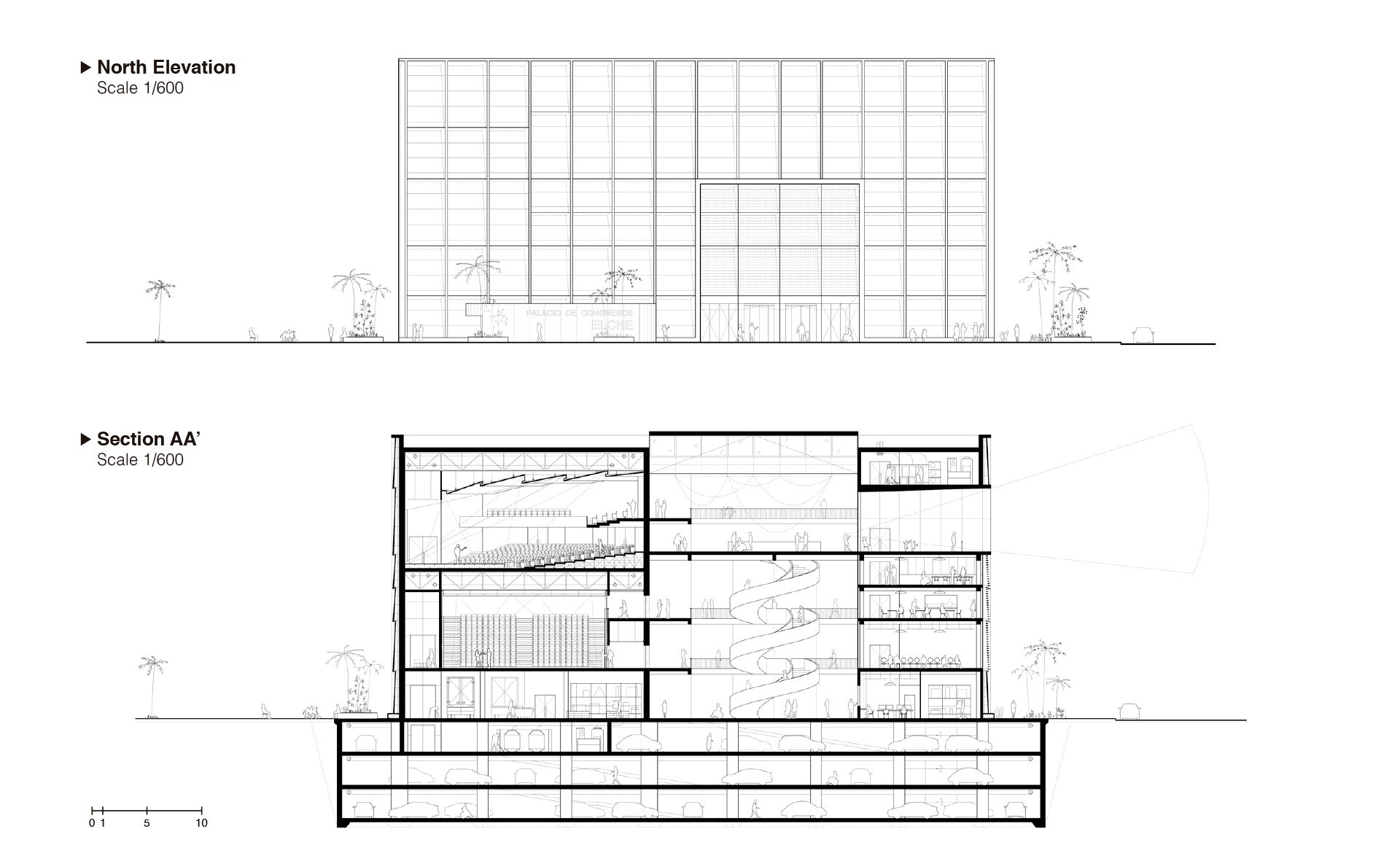
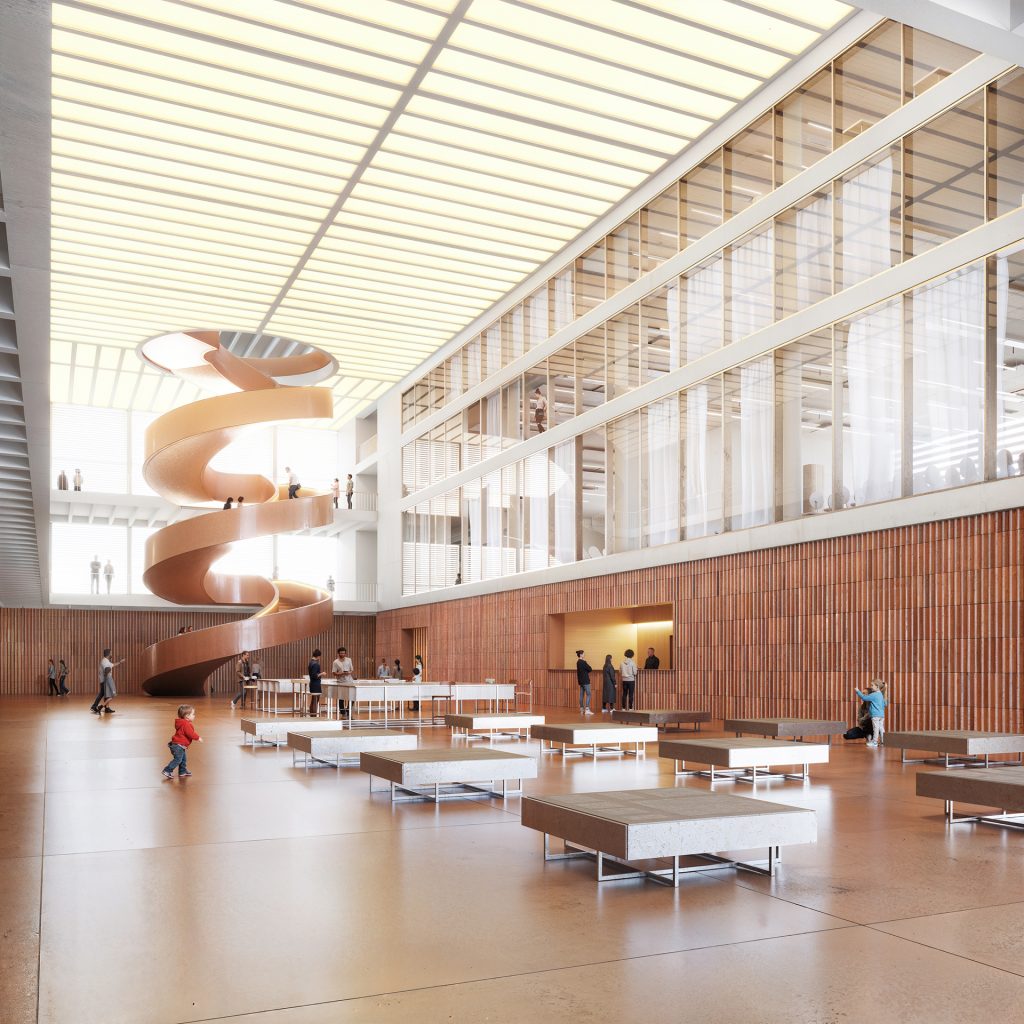
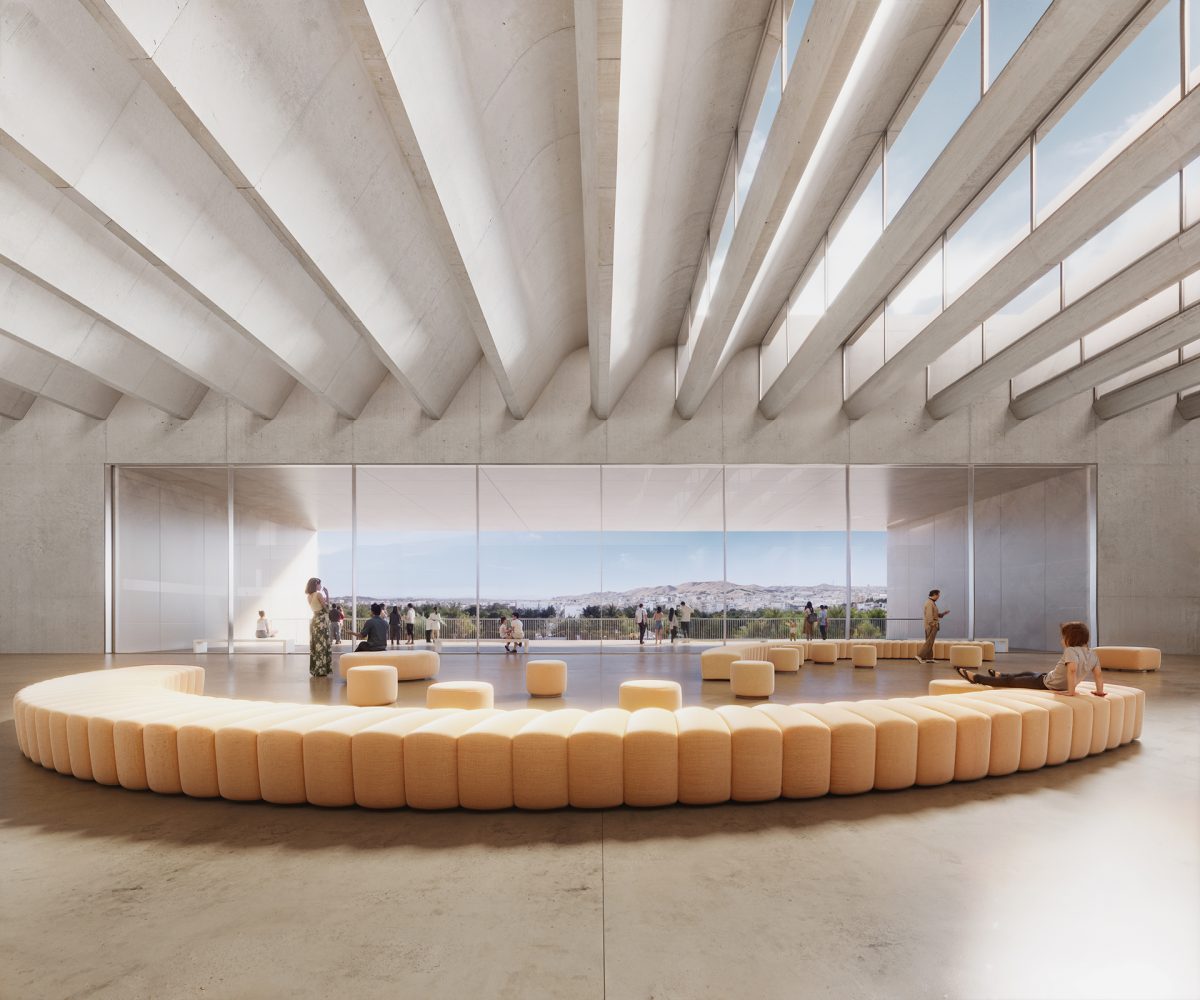
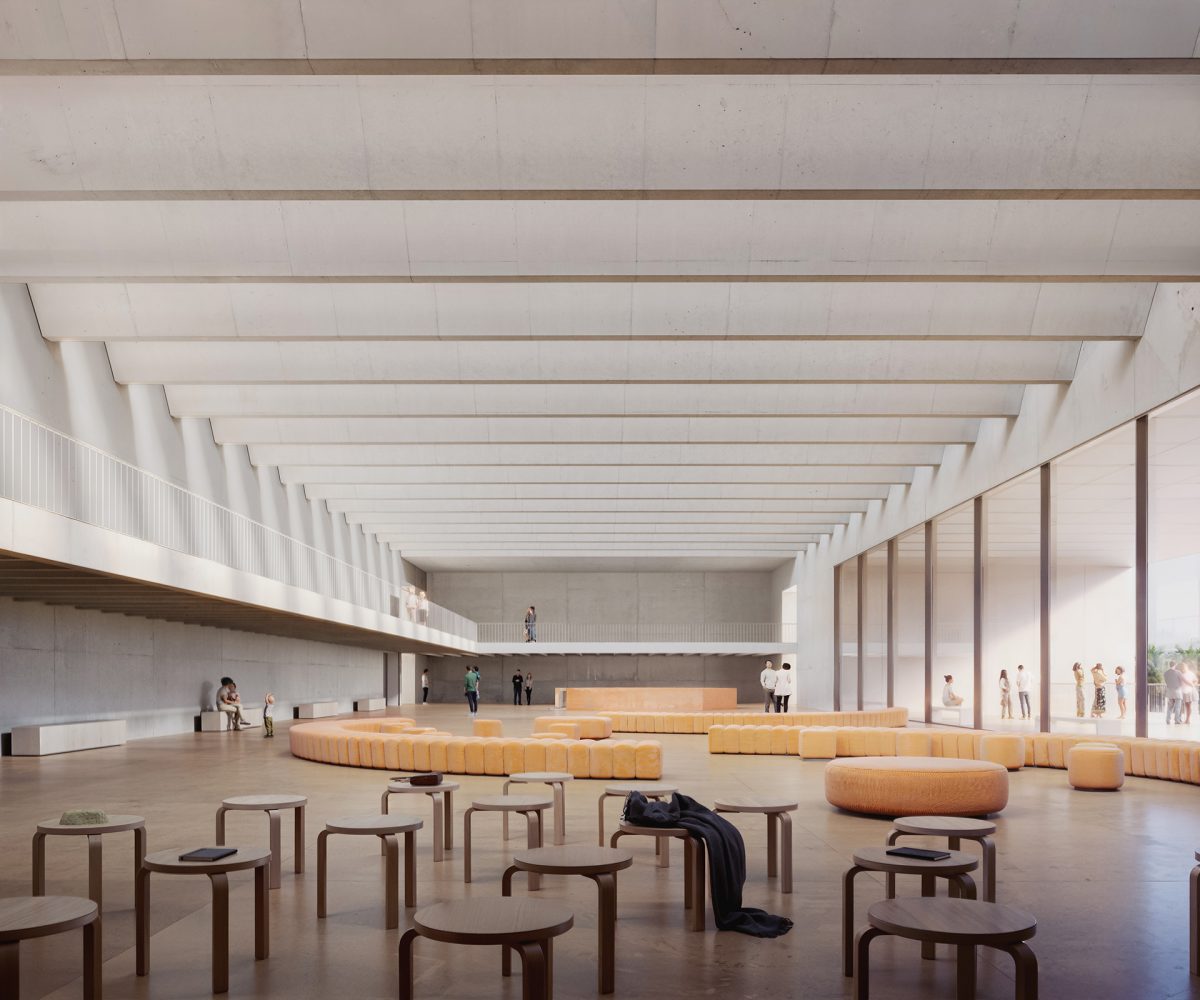
The first realm is located adjacent to the main entrance and functions as a luminous lobby, establishing the initial threshold of contact between the visitor and the building. The second is located on the third floor and is characterized by its zenithal lighting and its privileged views toward the Palmeral, becoming an interior belvedere that establishes a direct dialogue between the user and the landscape. This latter space not only facilitates a visual connection with the natural surroundings, but also operates as a symbolic device that evokes the living history of Elche and its landscape identity.
To convene and to host: Containing void.
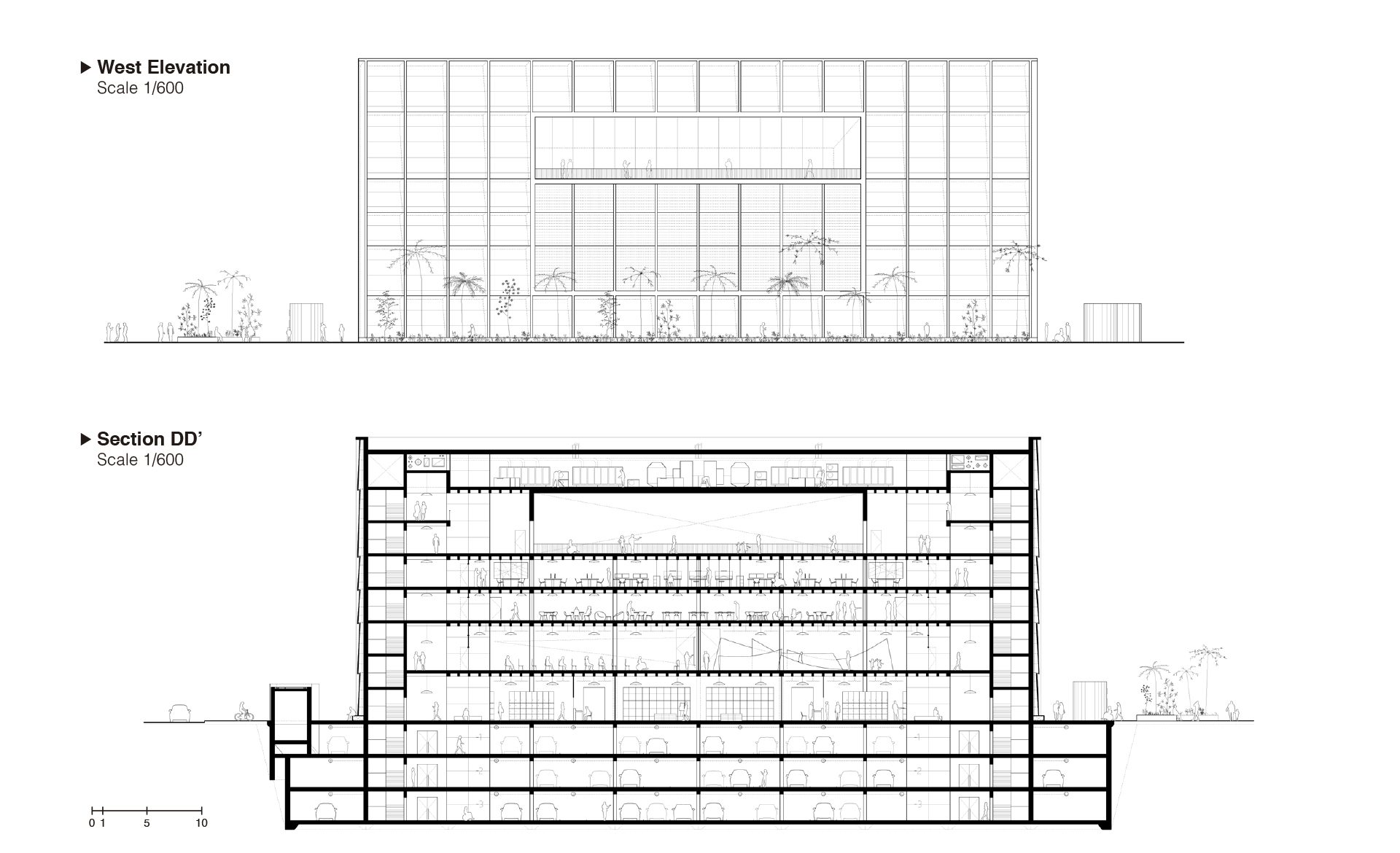
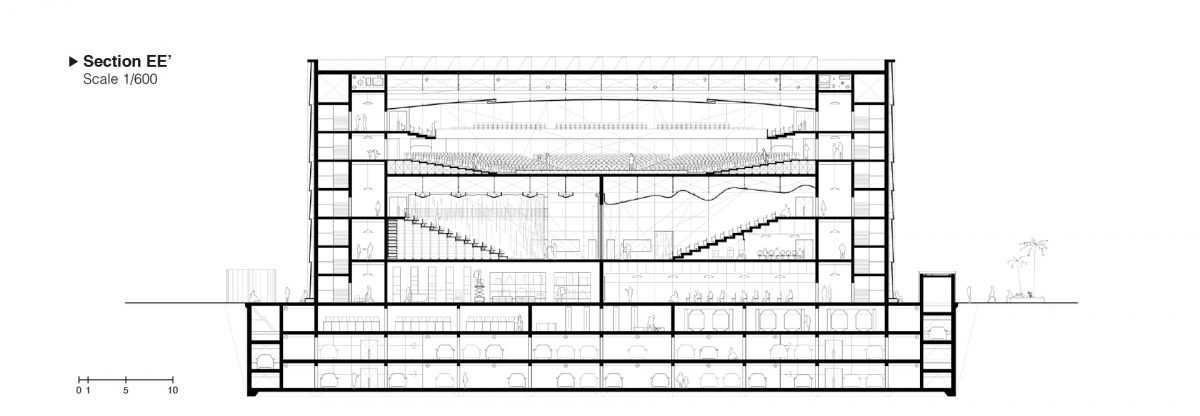
Both plazas operate as points of visual and physical intersection, enabling a continuous perception of space and encouraging transversal relationships among users. Through these central spaces, the different programs of the center—auditoria, meeting rooms, exhibition areas, rest zones, among others—are articulated and interrelated, allowing for clear and intuitive circulation. This organization generates a fluid spatial sequence that not only optimizes movement throughout the building, but also enriches the visitor’s experience by promoting interaction, visual continuity, and a sense of collective encounter.
The vertical circulation system that links both realms can be described as a “periscope of flows,” guiding the visitor from the entrance, through the first plaza, and projecting them toward the upper level, where a visual opening unfolds toward Elche and its historic palm grove, thus completing an architectural sequence that is at once spatial, functional, and symbolic..
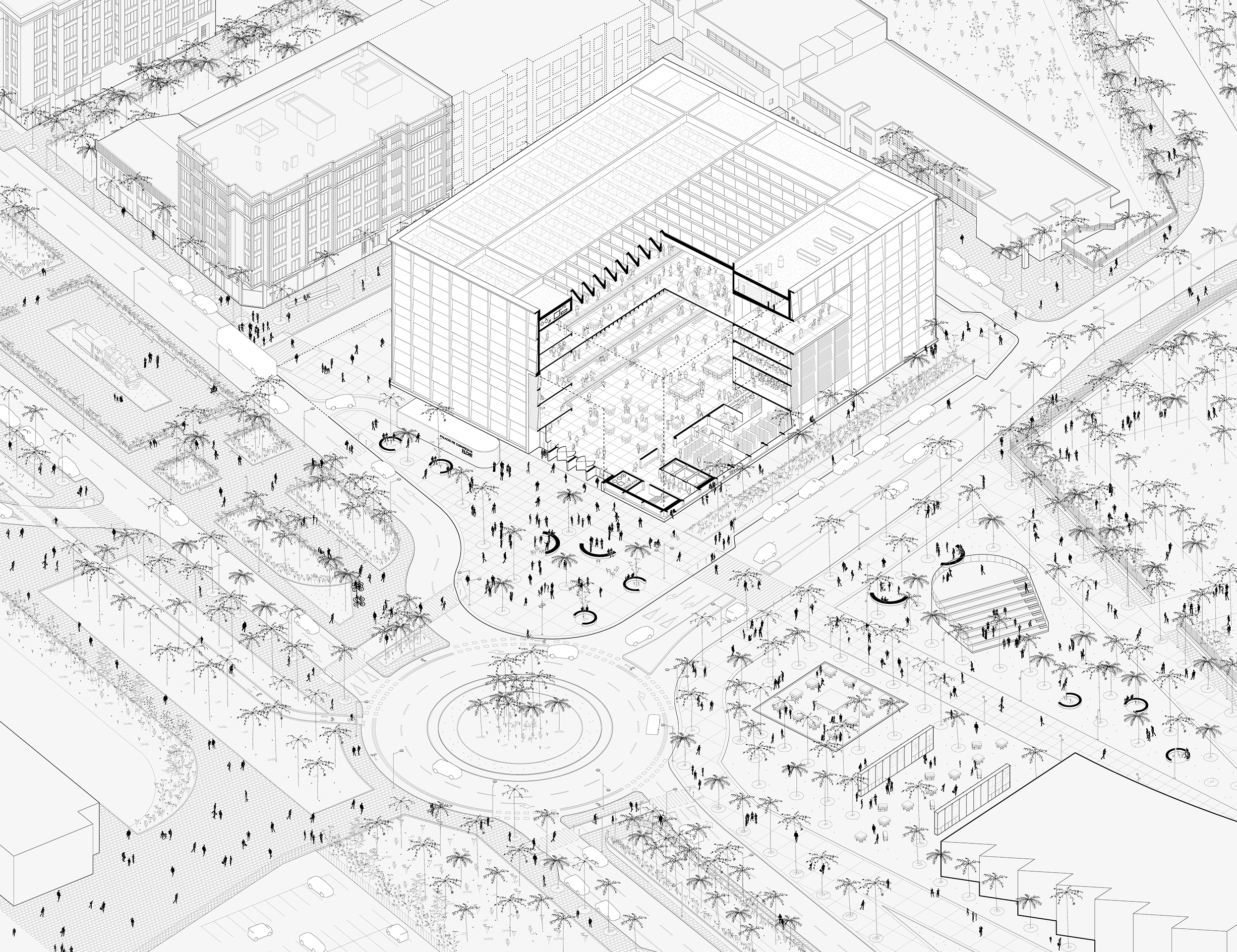
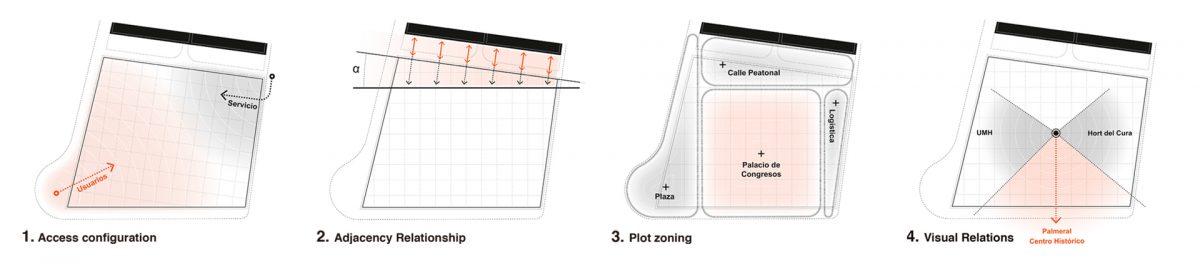
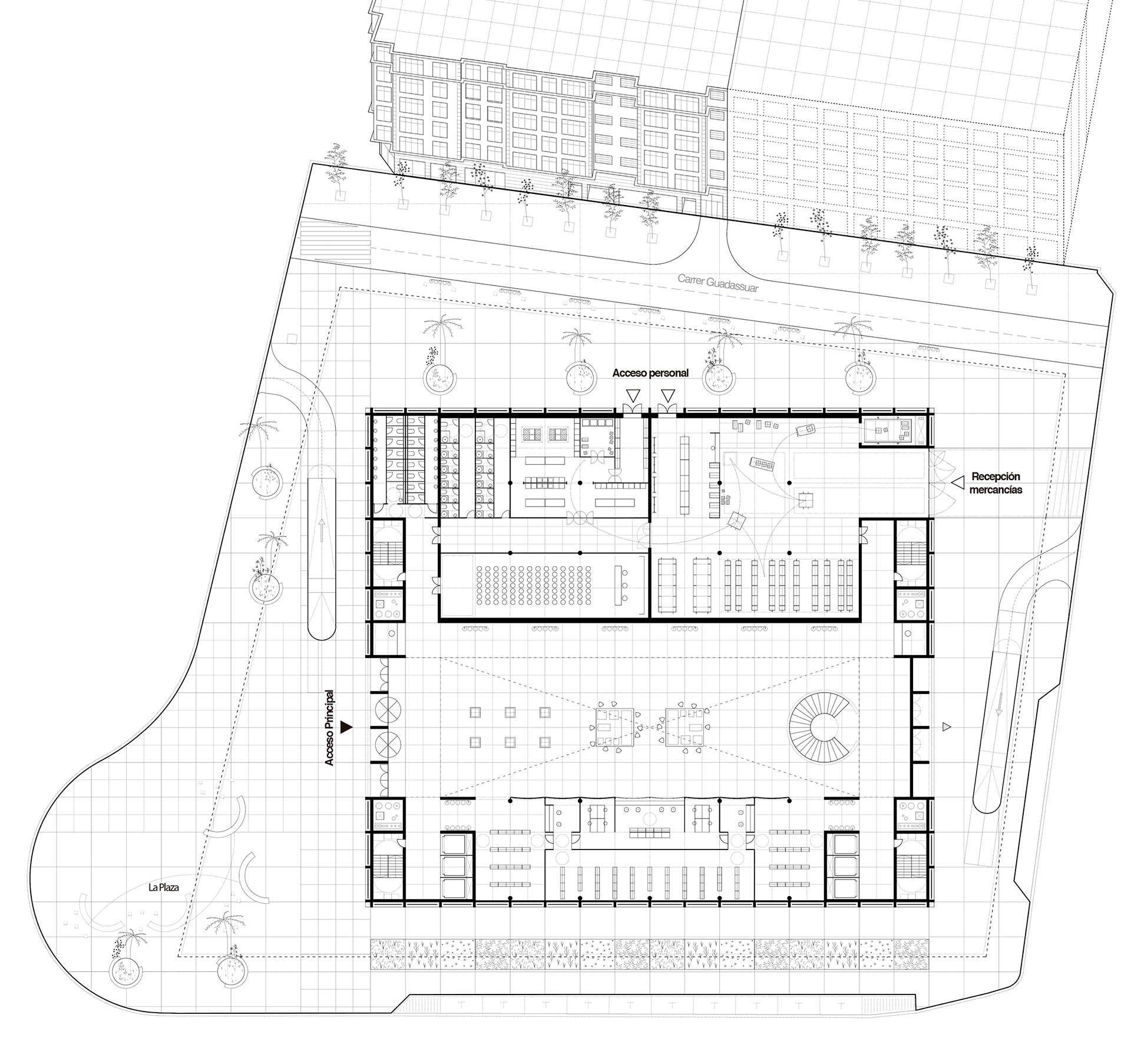
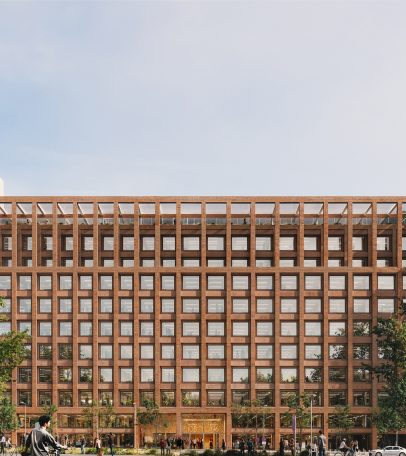
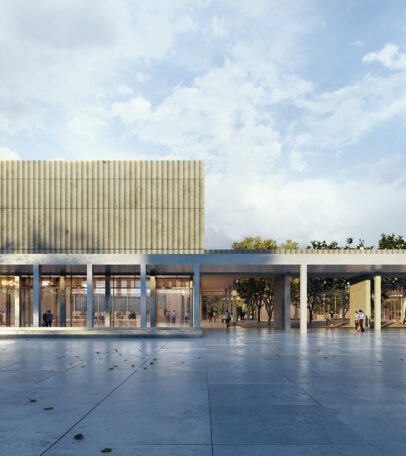
The design of the building is based on a volumetric strategy that involves a deliberate setback from the plot boundaries, generating an interstitial space that acts as a zone of transition and encounter. This exterior realm is structured through native vegetation, shaping a public threshold that promotes both environmental sustainability and landscape integration. By choosing not to occupy the entirety of the permitted buildable volume, the project gains in urban permeability and openness, establishing a more respectful and fluid relationship with the Palmeral and Avenida de la Universidad.
This gesture is not solely the result of a formal decision, but rather expresses a clear intent toward integration: the building engages with its urban and natural context through an open attitude, not imposing itself on its surroundings but entering into dialogue with them. The main entrance reinforces the civic character of the proposal and operates as a clear urban gesture, directly connecting the building with the city and the public transportation system. This strategic placement enhances accessibility and encourages interaction with the community, in keeping with the public, inclusive, and open vocation of the center.
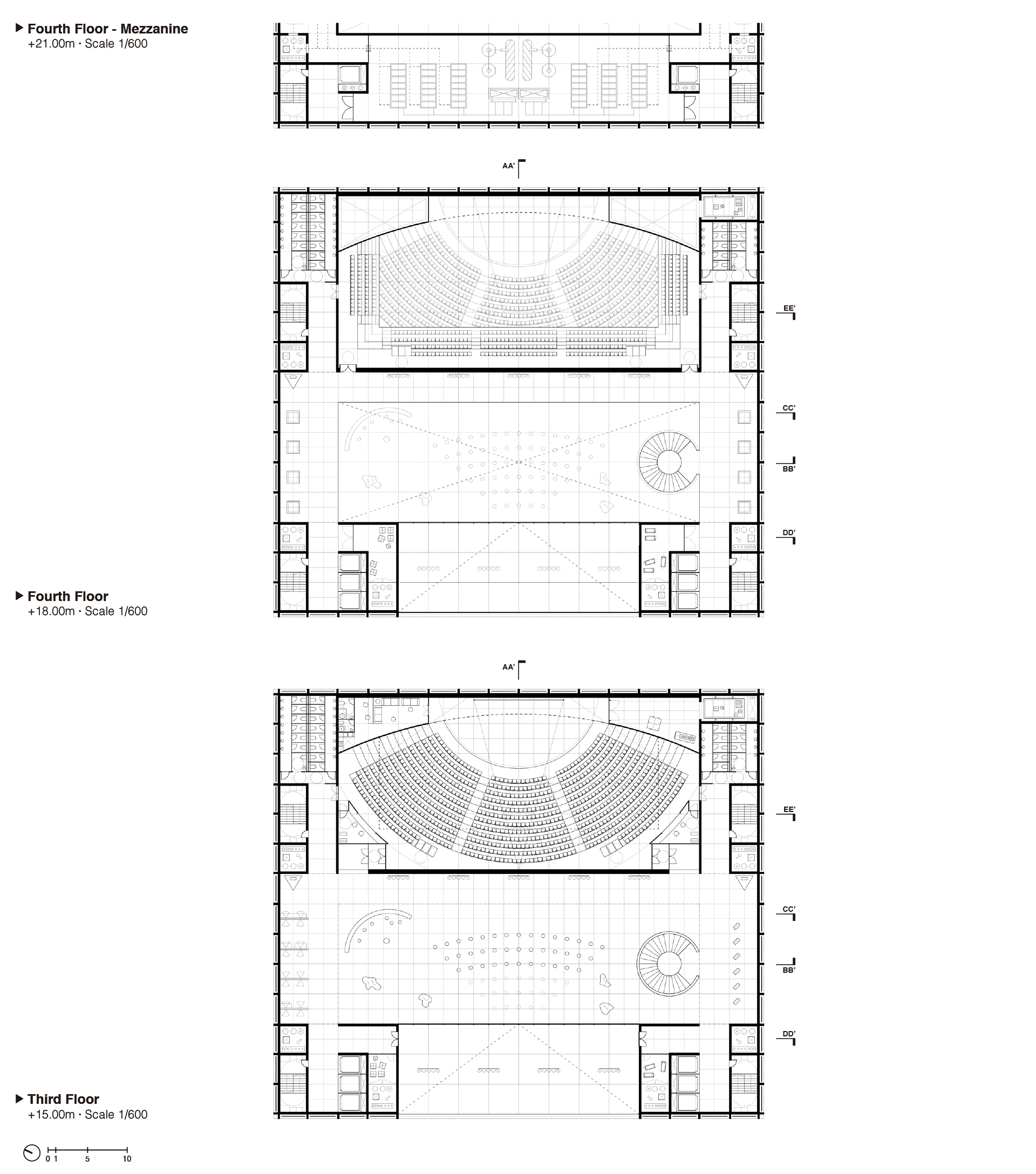
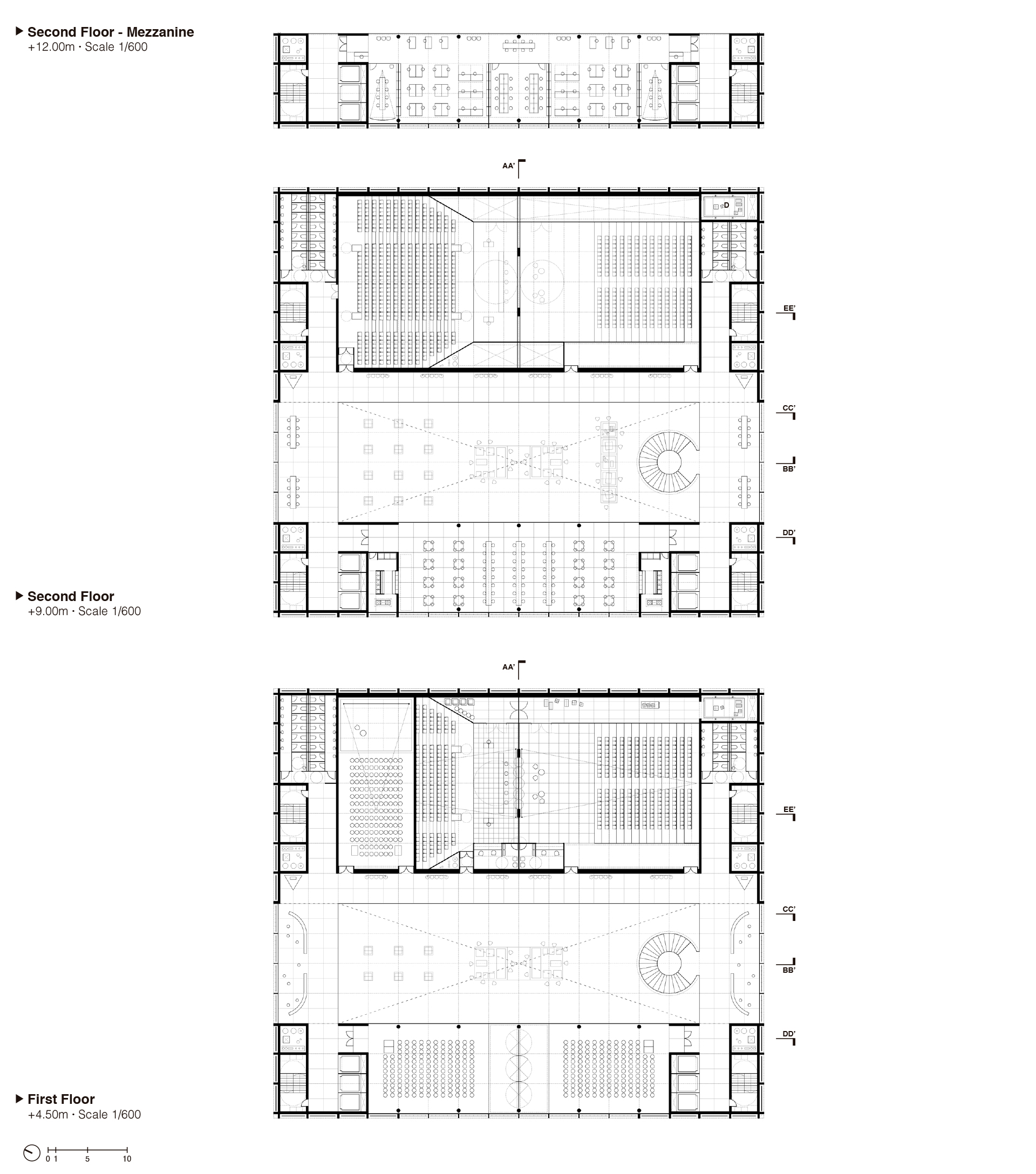
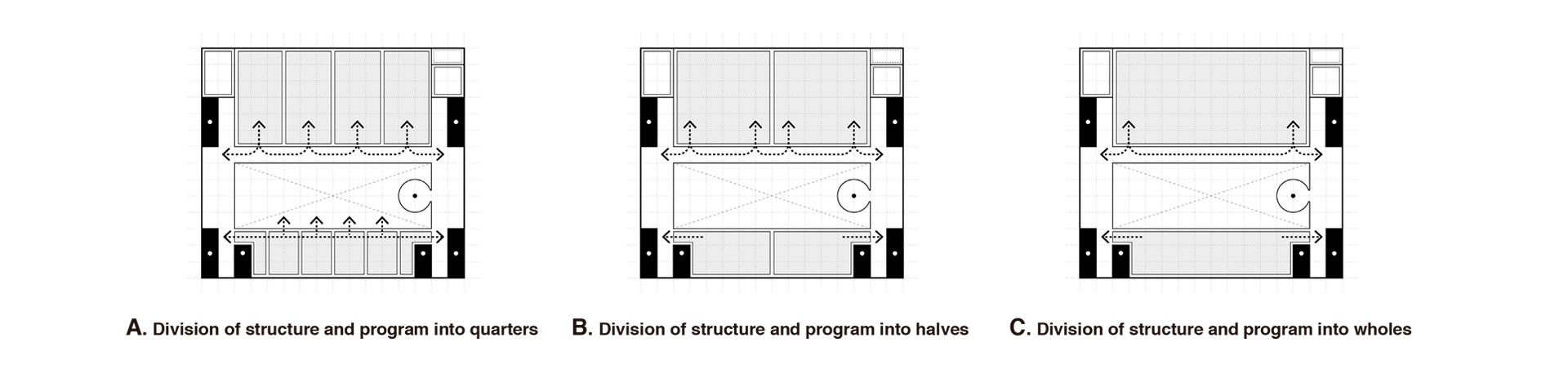
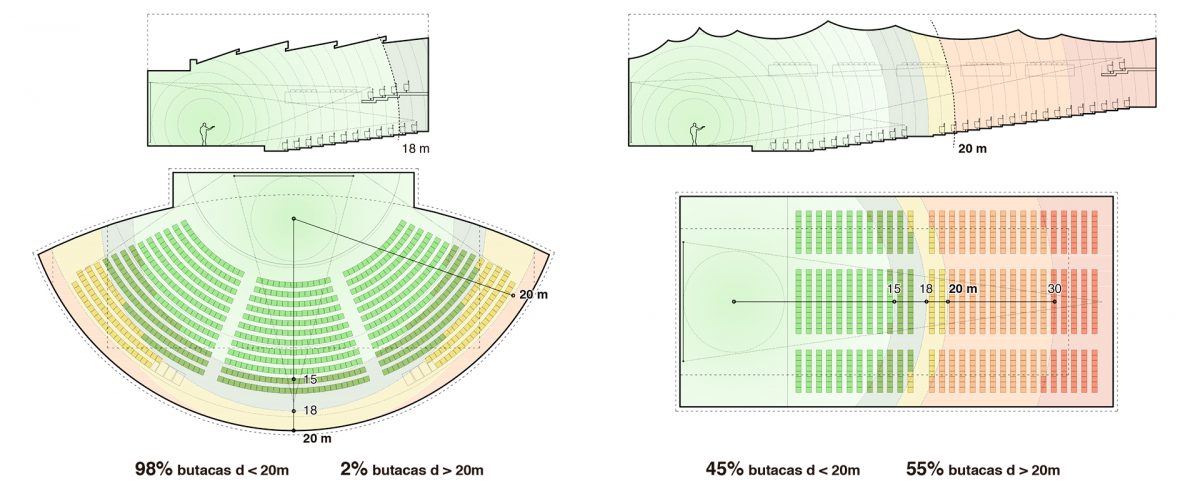
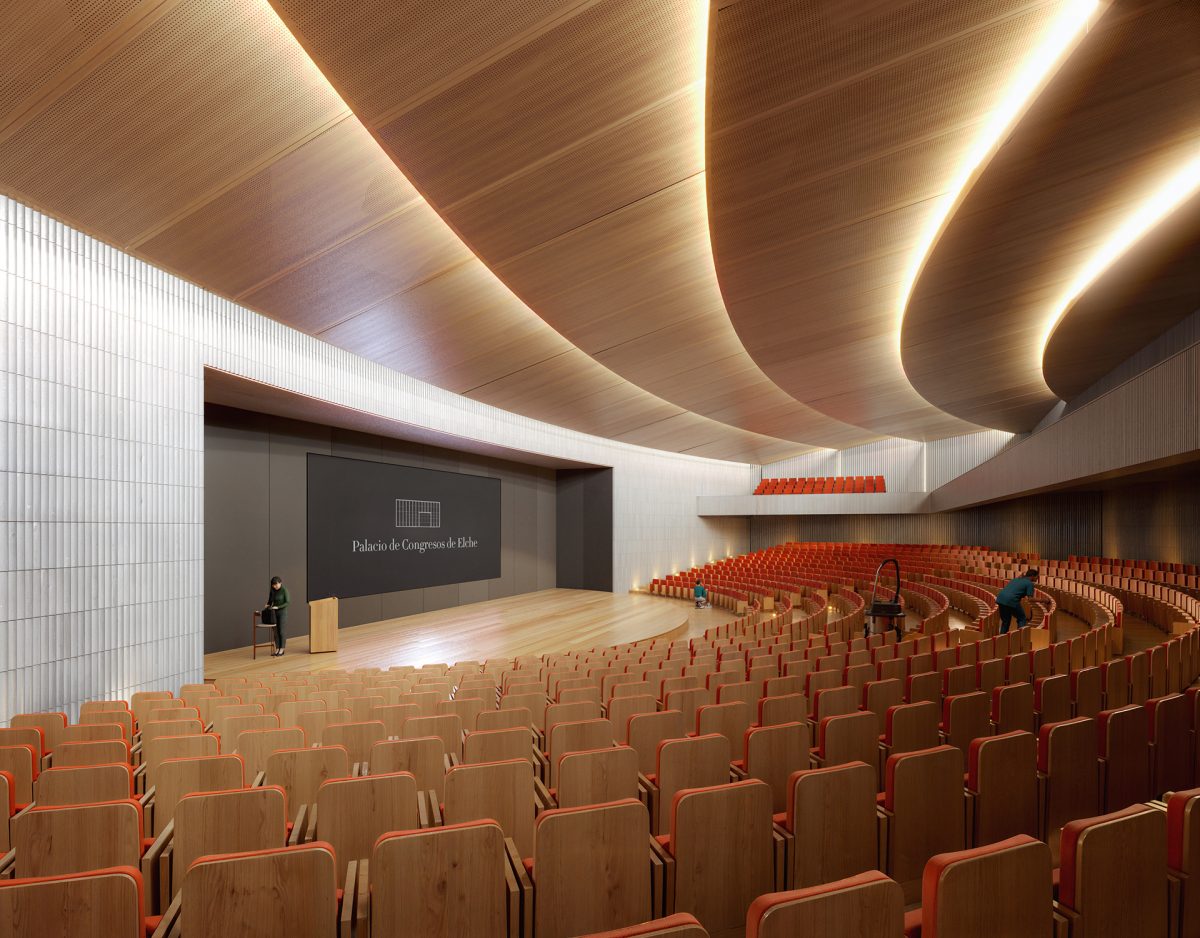
A. Main Hall of the Elche Conference Center
Geometric design oriented toward maximum visibility in the Main Hall, which will host lectures, symposia, conferences, and events with amplified sound.
B. Traditional Symphonic Hall
Unlike traditional rectangular halls conceived for unamplified music, the semicircular geometry ensures direct sightlines and proximity to the speaker
Materiality and Architectural Expression
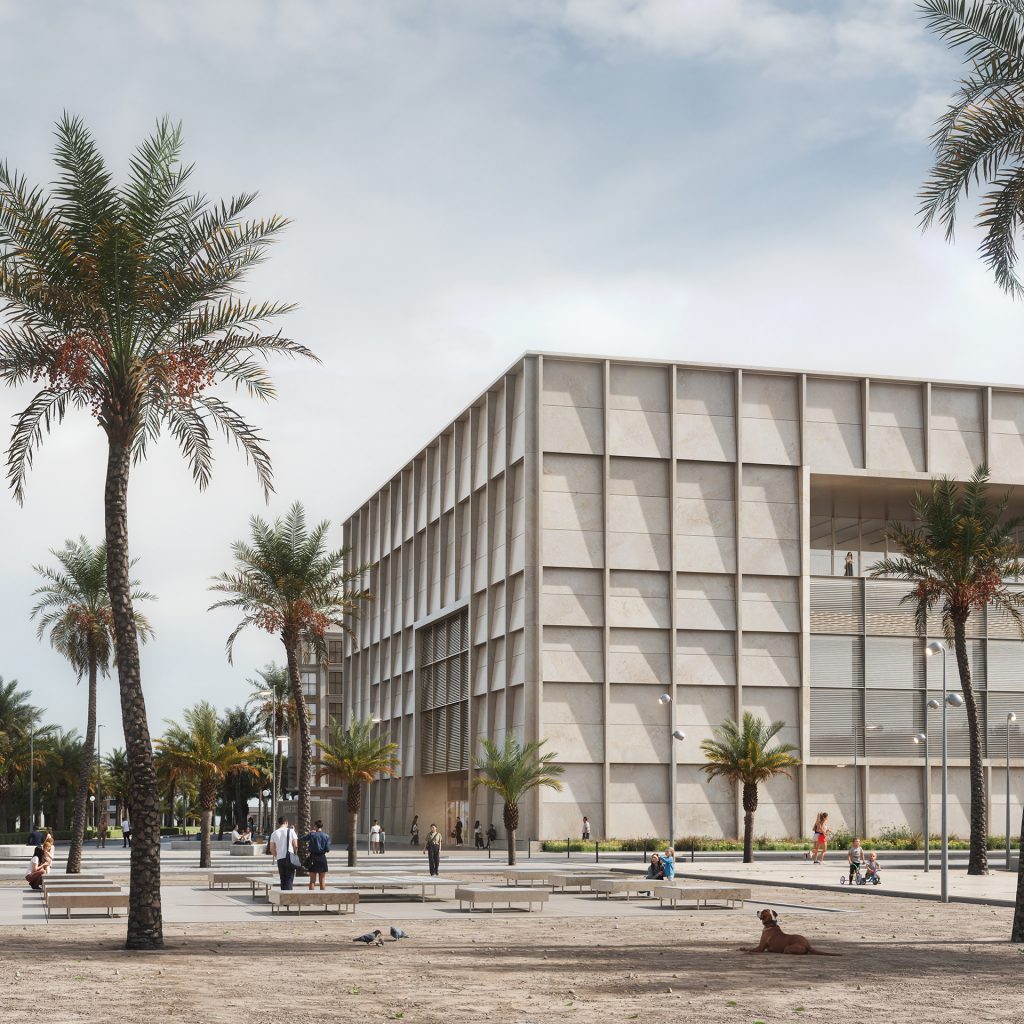
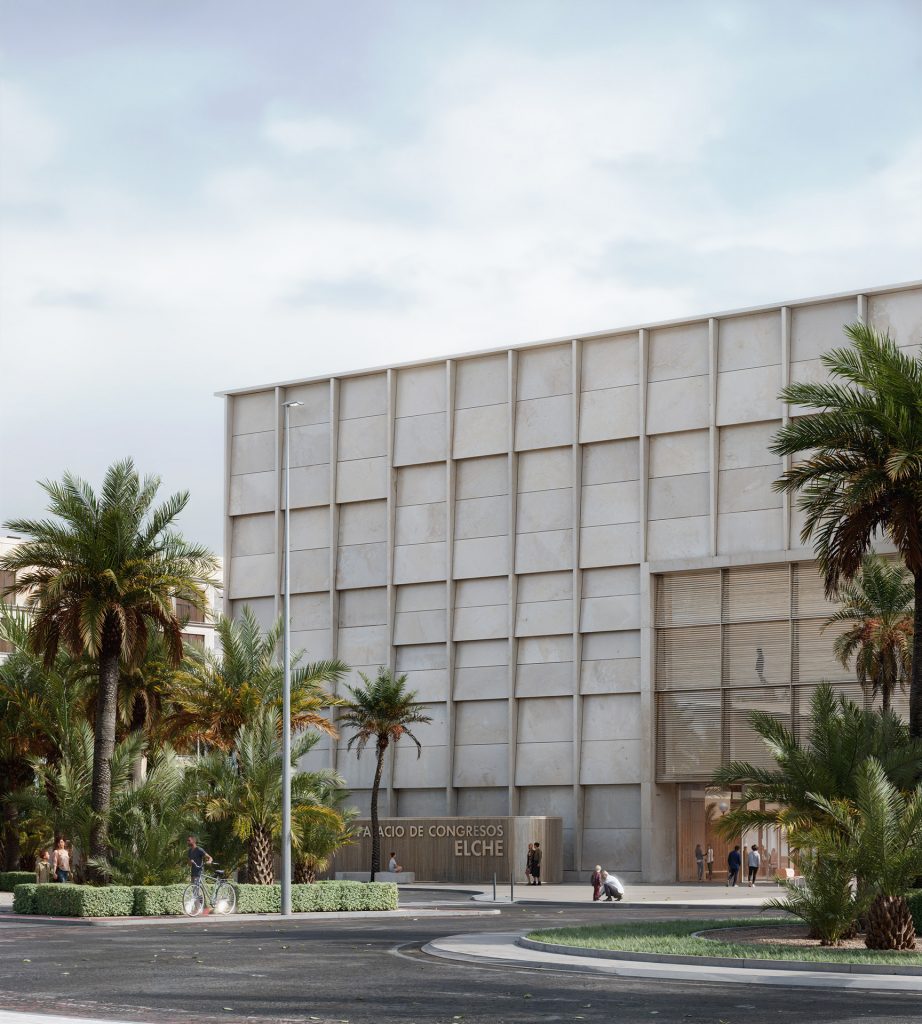
The building is conceived as a sober, compact, and efficient piece, in tune with the material and
formal languages characteristic of traditional architecture in the southeastern Iberian Peninsula.
Although it conveys an institutional character—grounded in structural rigor, programmatic
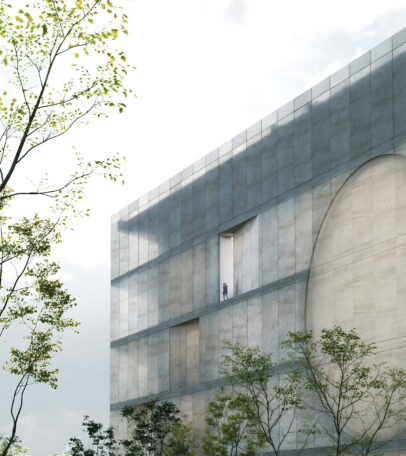
coherence, and compositional rationality—it incorporates slightly inclined stone panels that,
by subtly departing from orthogonality, soften the potential monolithic character of the ensemble.
Priority is given to the use of local construction resources such as limestone, ceramics, and
pigmented concrete in earthy tones, fostering chromatic and material integration with the
surrounding context. From an environmental perspective, the proposal is based on passive
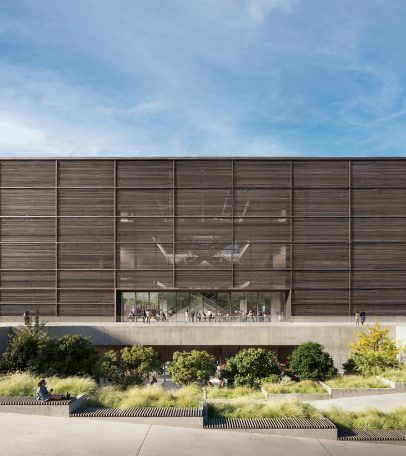
principles: thermal inertia, solar control through louvers, overhangs, and screens, natural cross
ventilation, and intermediate spaces that act as climatic filters. In this way, the project
advocates for an architecture that not only adapts to its context, but interprets it in a
sober, conscious manner, deeply rooted in place.
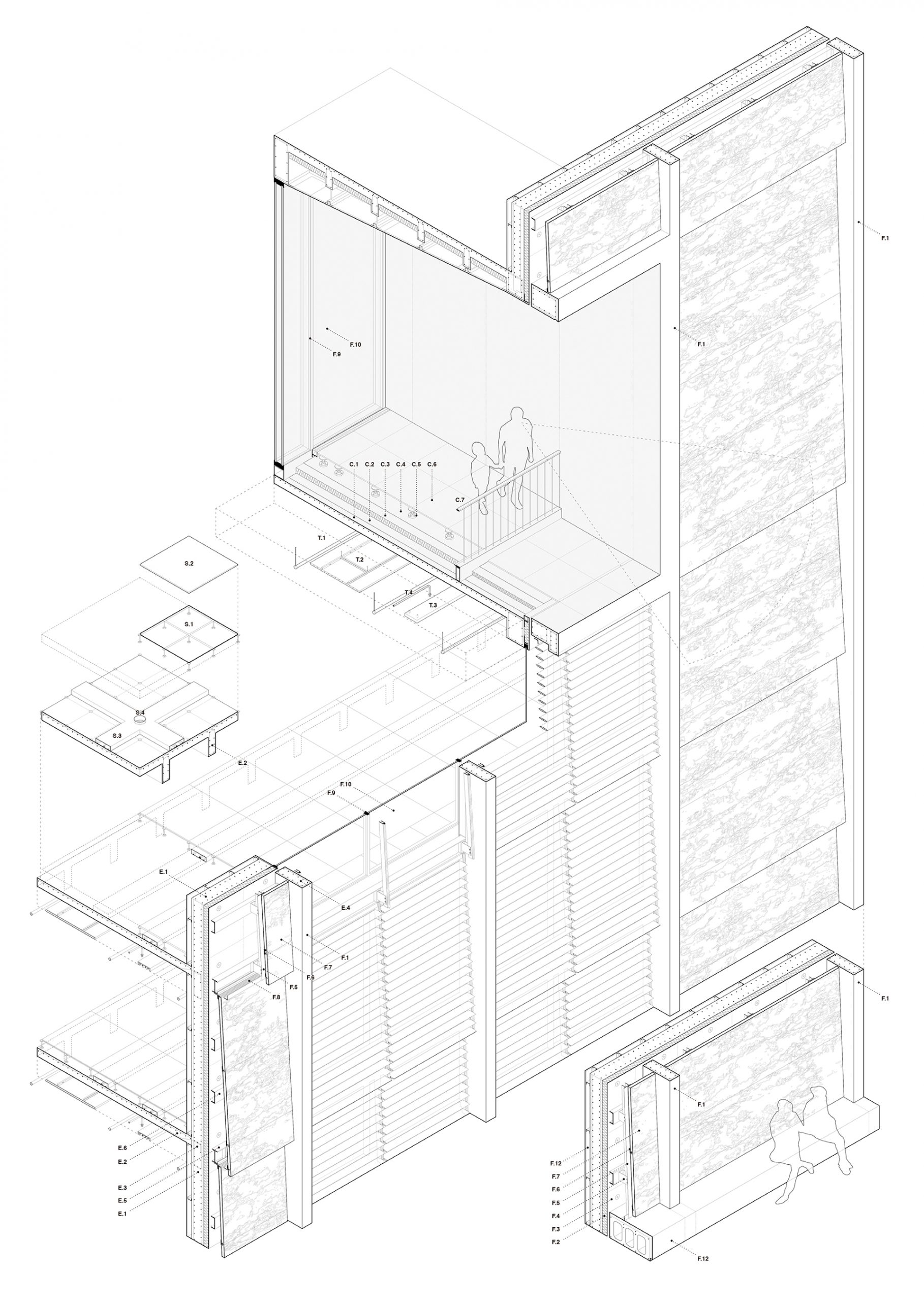
The façade is resolved as a ventilated system composed of reinforced concrete pilasters and
horizontal metal profiles which, set apart from the main wall, contribute structurally while
generating a continuous ventilated cavity. The outer plane, formed by limestone panels
mounted on concealed anchors and arranged with a slight inclination, establishes a fractured
rhythm that acts as a solar filter and protection against water. In glazed sections, this rhythm
integrates a curtain wall with horizontal metal louvers, ensuring formal coherence across the
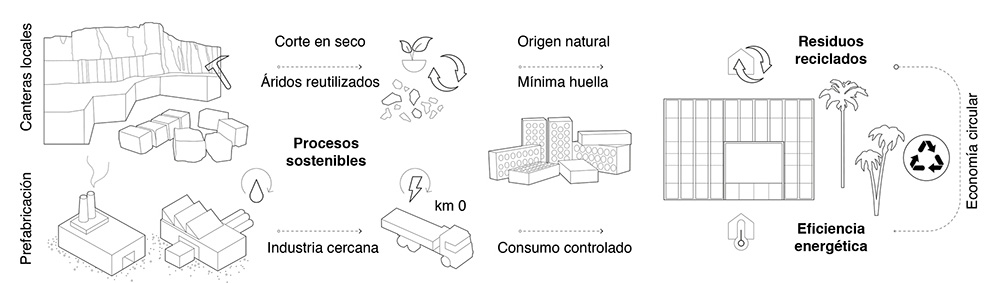
entire envelope. The stone, extracted from local quarries using sustainable techniques such as
dry cutting, reduces water and energy consumption. The resulting waste is reused as recycled
aggregate in the concrete structure or as gravel in exterior areas, completing a proximity-based
strategy that minimizes transportation and activates local economies.
Water System
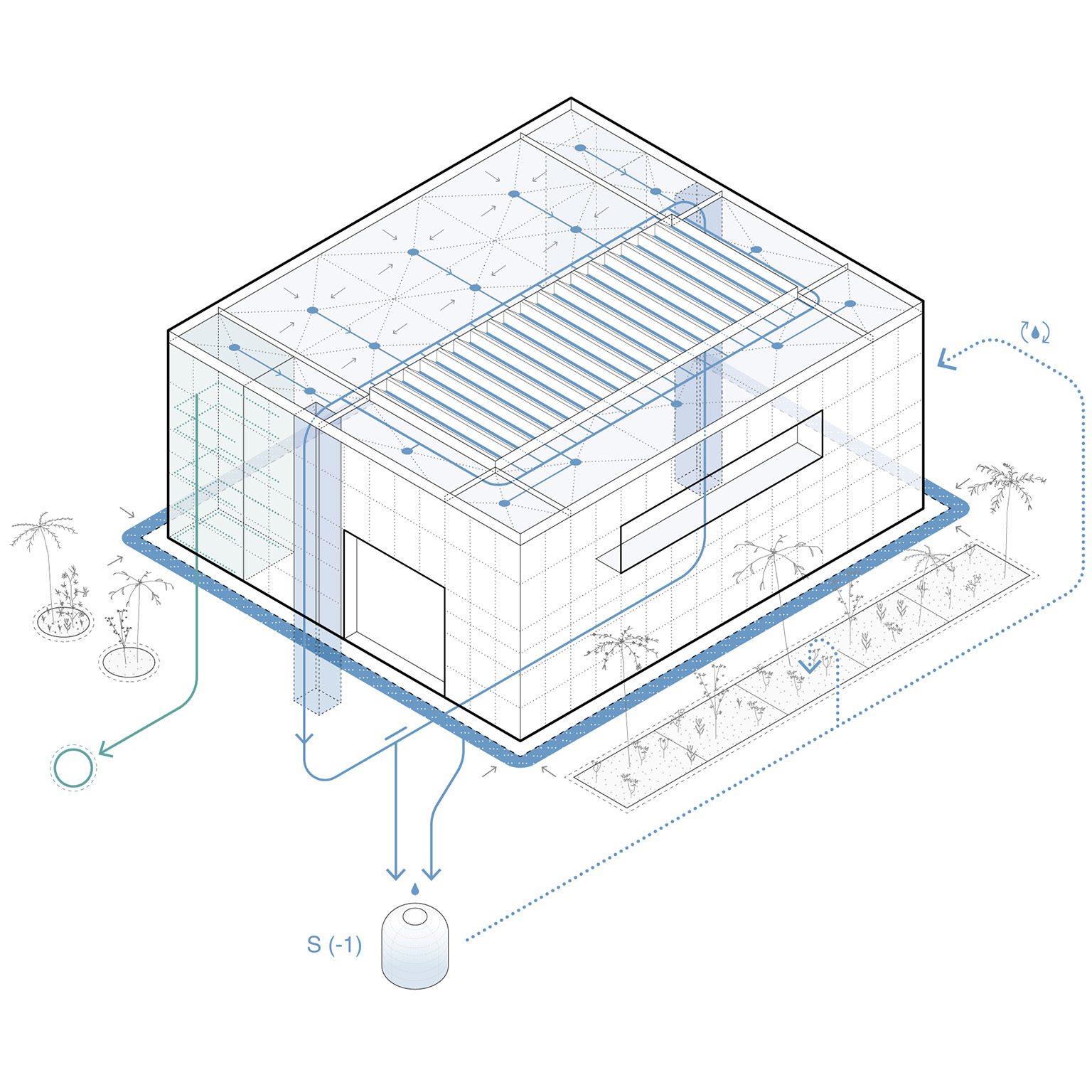
The building collects greywater and rainwater, which are stored in cisterns at basement level -1. This water is treated and reused for non-potable uses and irrigation, optimizing water consumption.
Energy System
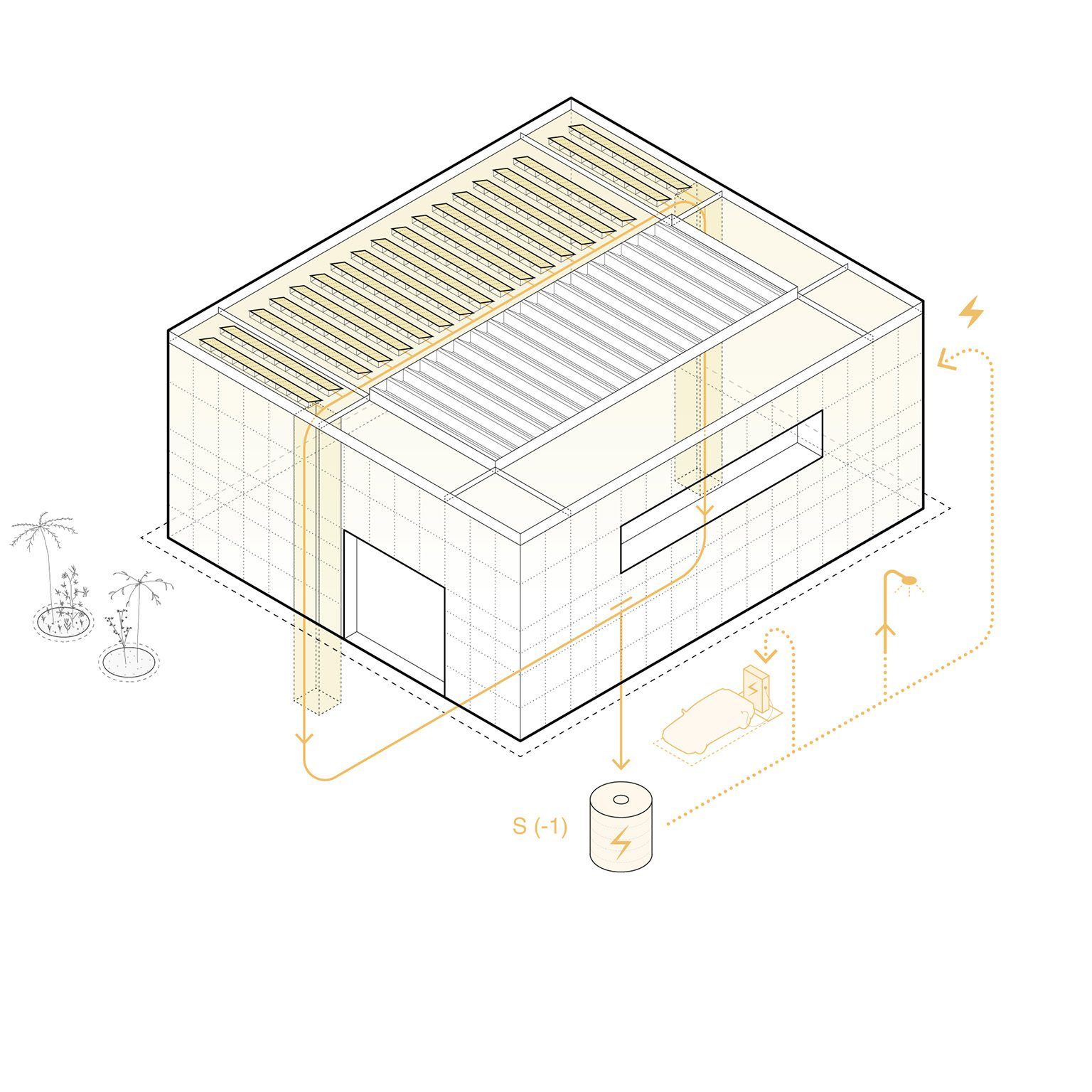
The eastern area of the roof allows for the installation of solar panels with optimal tilt and southern orientation. The energy generated is allocated to the building’s electrical self-consumption and its exterior spaces.
Climate System
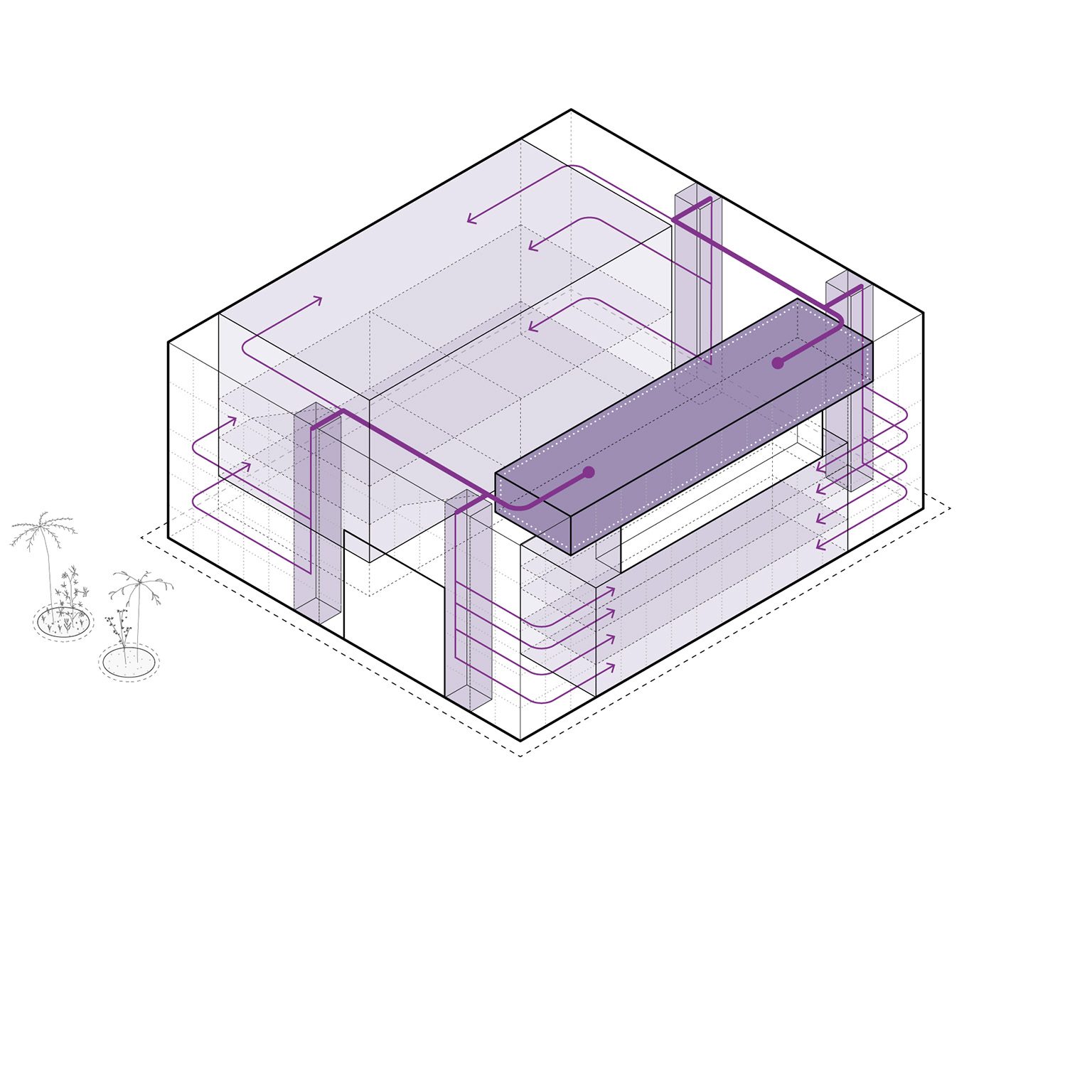
The climate systems are concentrated in a technical core on the uppermost level. From there, thermal comfort is centrally and efficiently managed and distributed throughout the entire building through adjacent suspended ceilings and four symmetrical service shafts.

Project Team
- Luis Collado
- Jose Luis de la Fuente
- Ignacio Espigares
- Inés Fernández
- Álvaro Mesquida
- Gonzalo Rojas
- Miguel Ruiz-Rivas