International Student Residence · UOS
Mixed-Use · Seoul, KR
INTERNATIONAL DESIGN COMPETITION
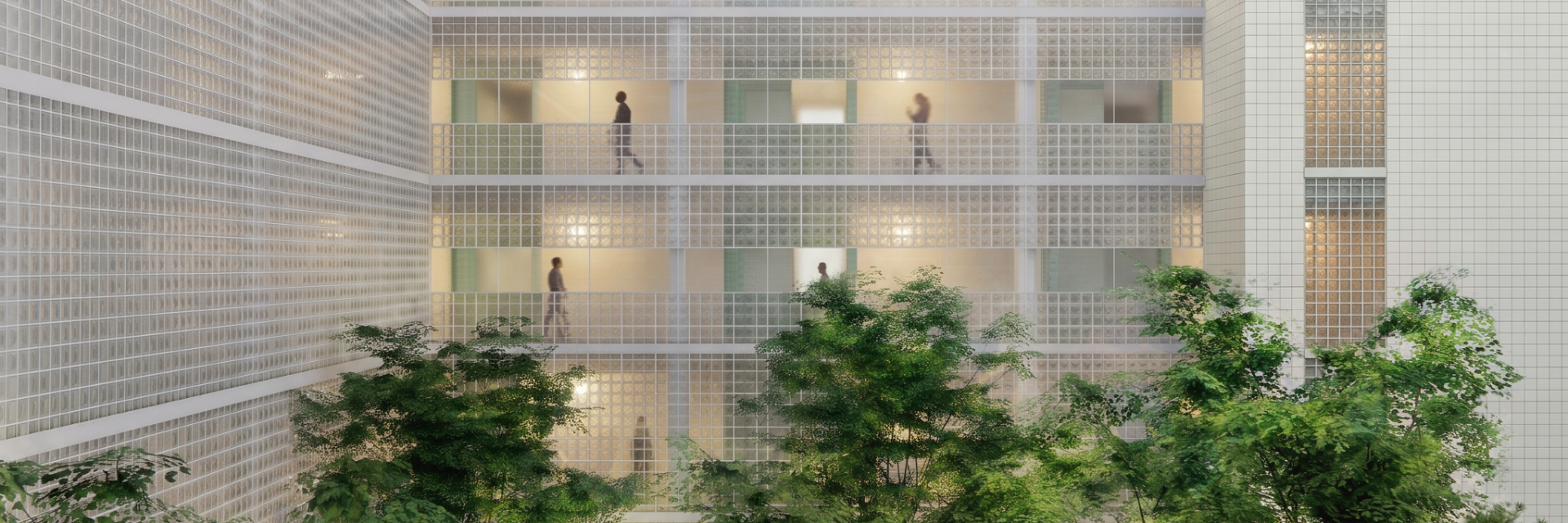
The International Student Residence at the University of Seoul is conceived as a climate-responsive living environment that balances ecological sensitivity, student wellbeing, and campus integration within a cohesive architectural framework. Organized around a central courtyard, the project establishes a spatial hierarchy where landscape functions as both an environmental moderator and a social nucleus. Carefully adapted to the site’s topography and existing vegetation, the residence minimizes ecological impact while reinforcing continuity with the surrounding campus through interconnected pathways and shared open spaces. Accessible circulation systems, daylight-oriented communal areas, and passive environmental strategies foster an inclusive residential environment that encourages both privacy and social interaction within Seoul’s climatic and urban context.
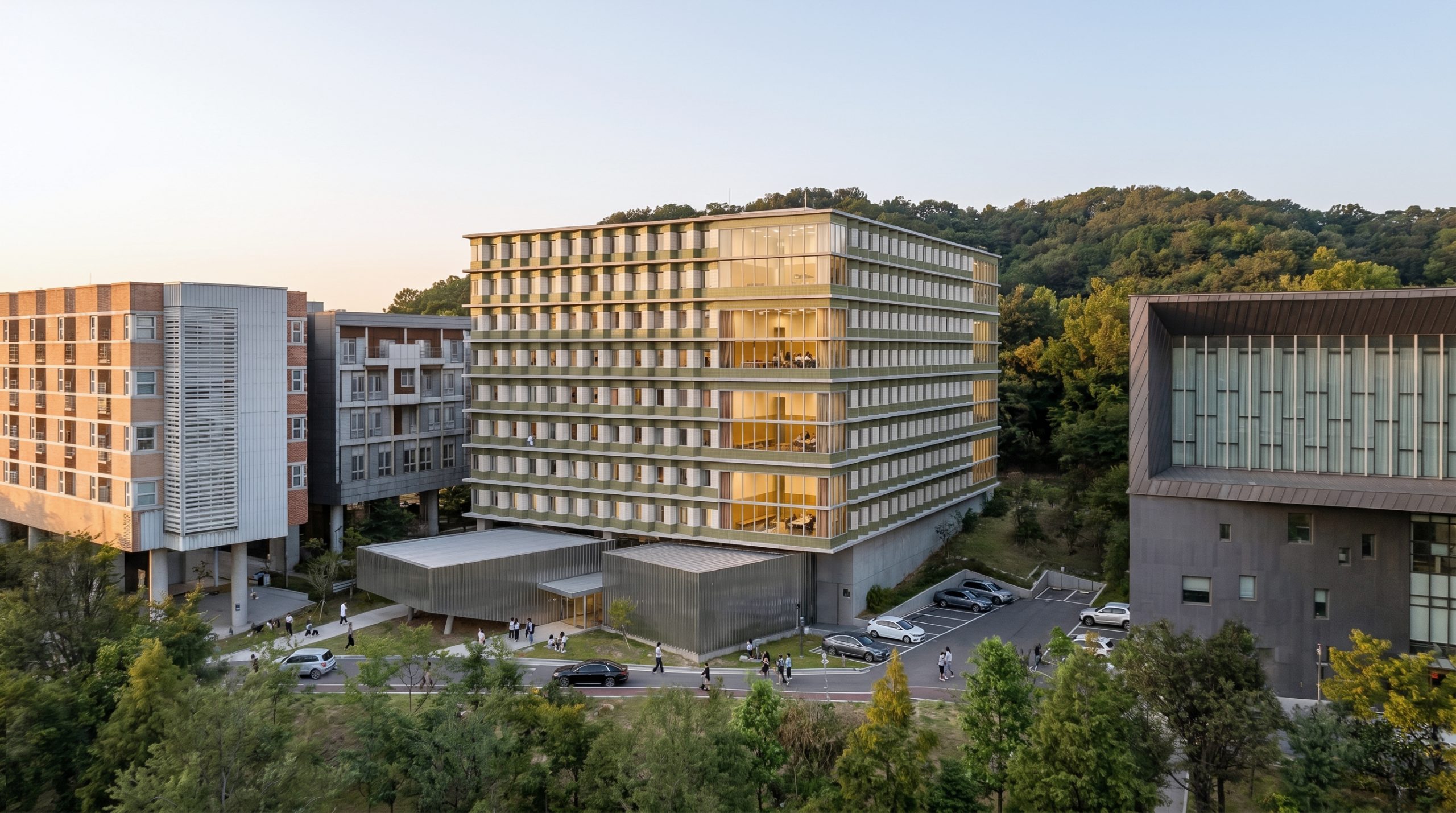
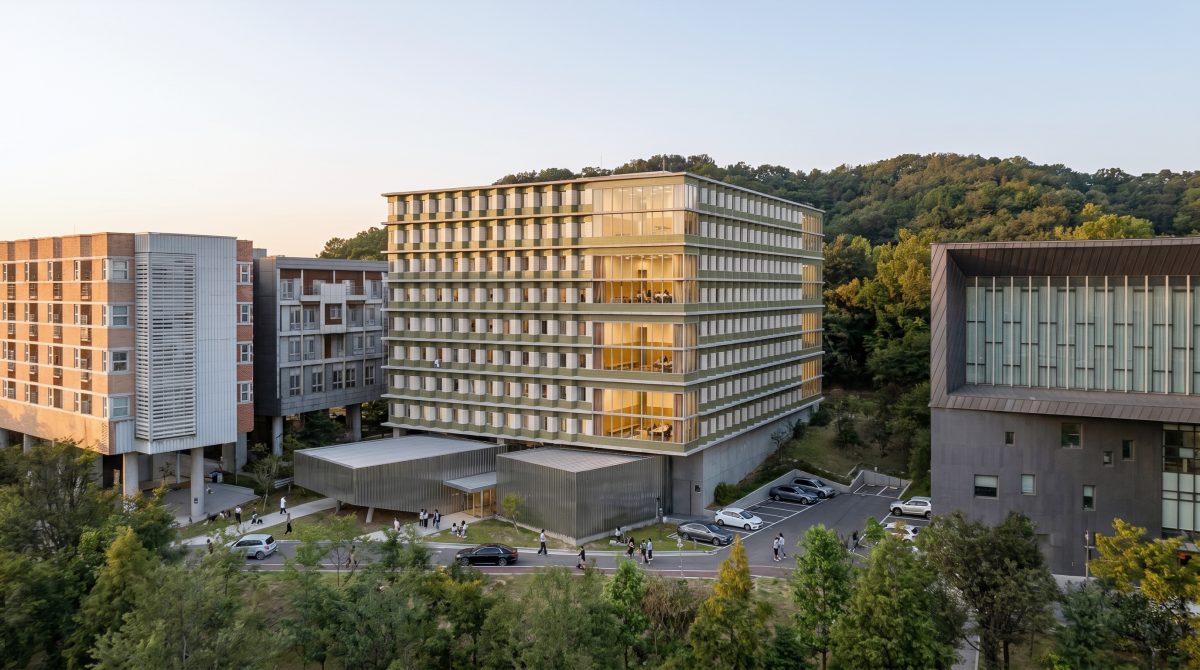
The proposal is carefully integrated into the existing topography of the site, preserving forested areas through a compact footprint and a sectional approach that minimizes earthwork. Although conceived as an independent facility, the residence maintains continuity with adjacent dormitories and the Music Building through aligned pedestrian pathways, visual corridors, and shared open spaces that reinforce campus cohesion while preserving residential privacy. This strategy allows it to remain fully connected to the campus environment while maintaining an independent identity.
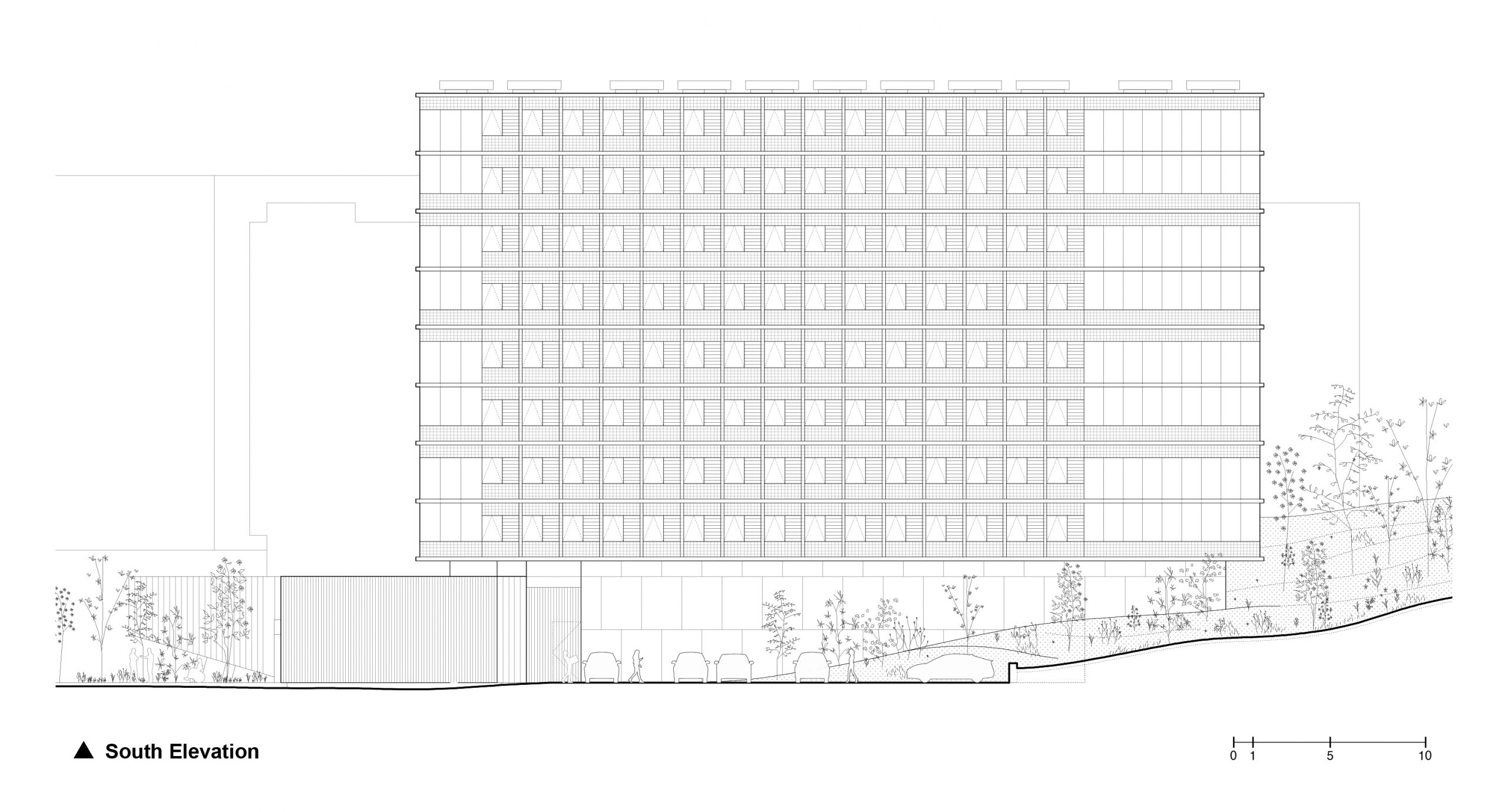
Circulation across the site is organized through a clear separation between vehicular and pedestrian systems. Vehicular access, parking, and service areas are restricted to the perimeter near the Music Building, while pedestrian movement is prioritized through accessible pathways integrated into the sloped terrain through ramps, terraces, and gradual level transitions. This sectional landscape strategy strengthens the continuity between architecture and topography while embedding circulation and shared spaces directly within the natural environment.
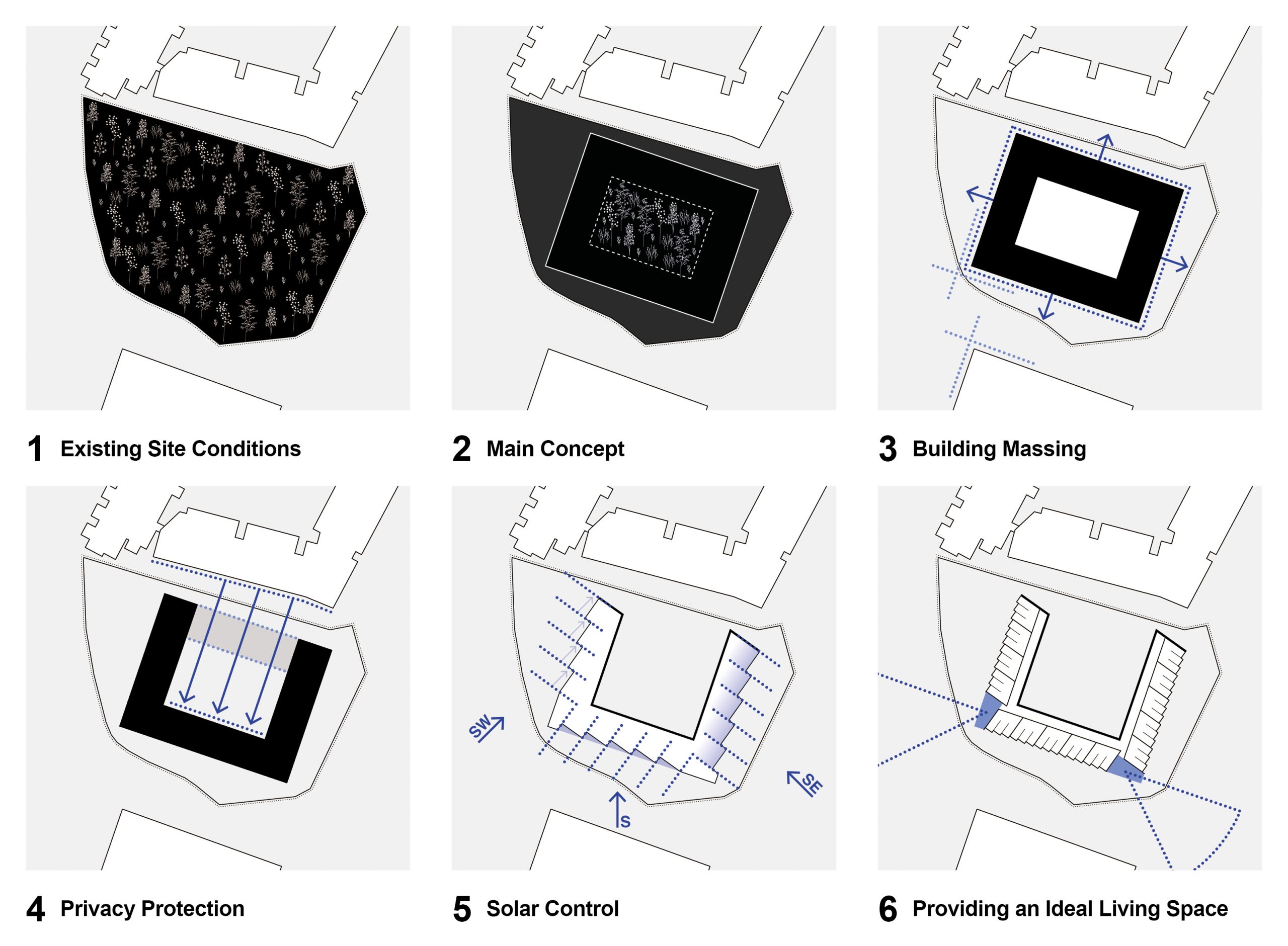
Project Concept and Organizational Approach
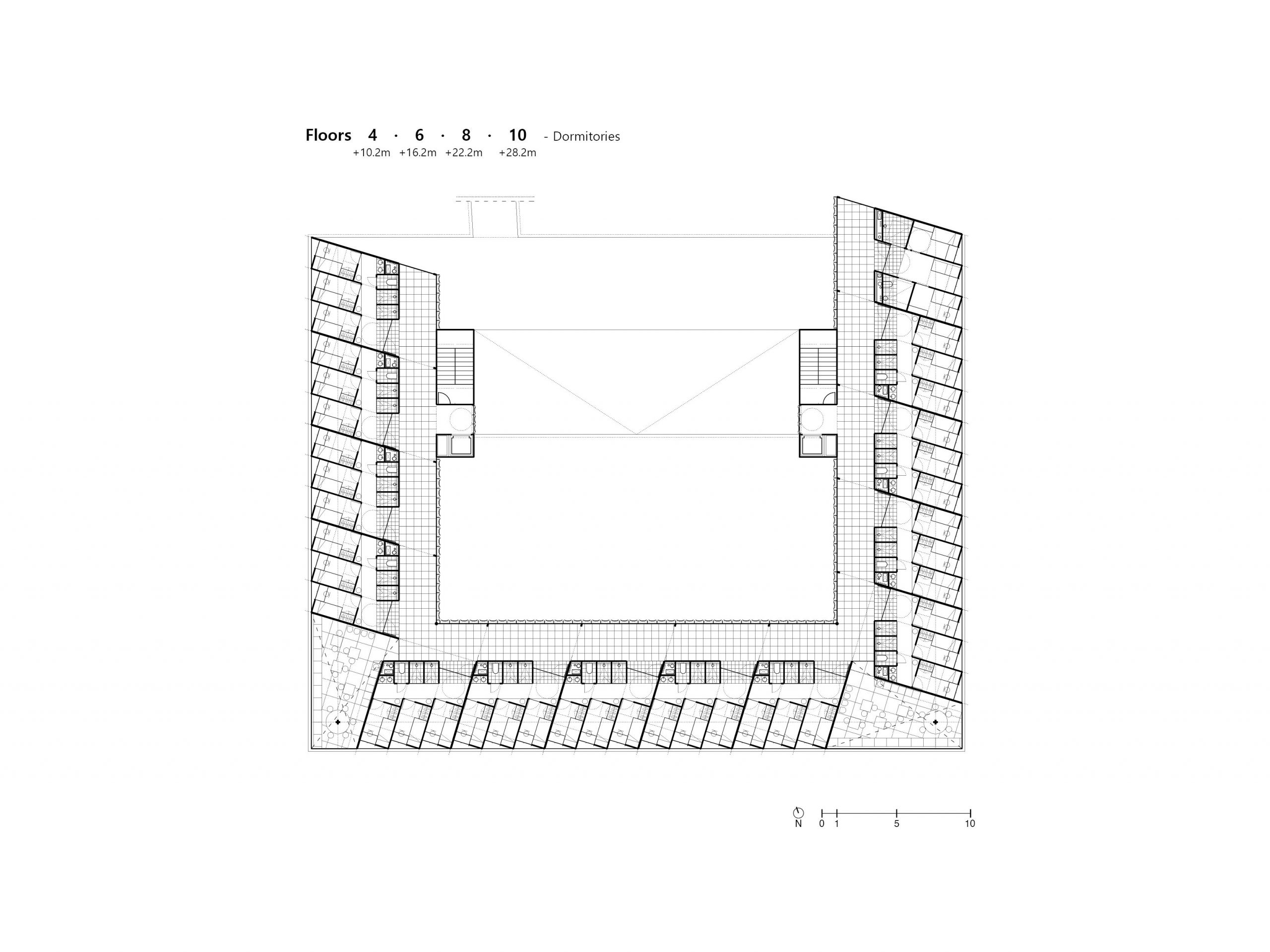
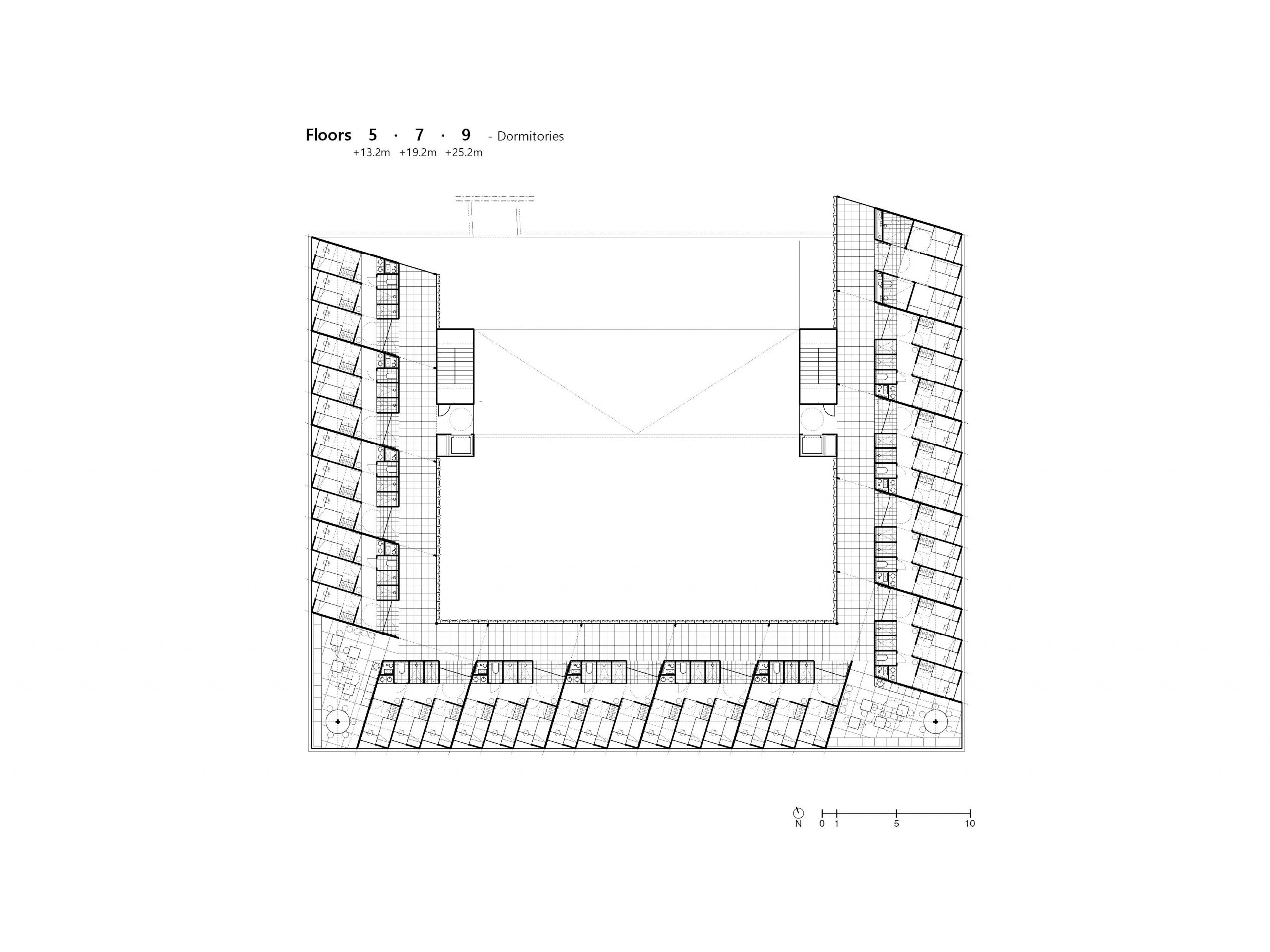
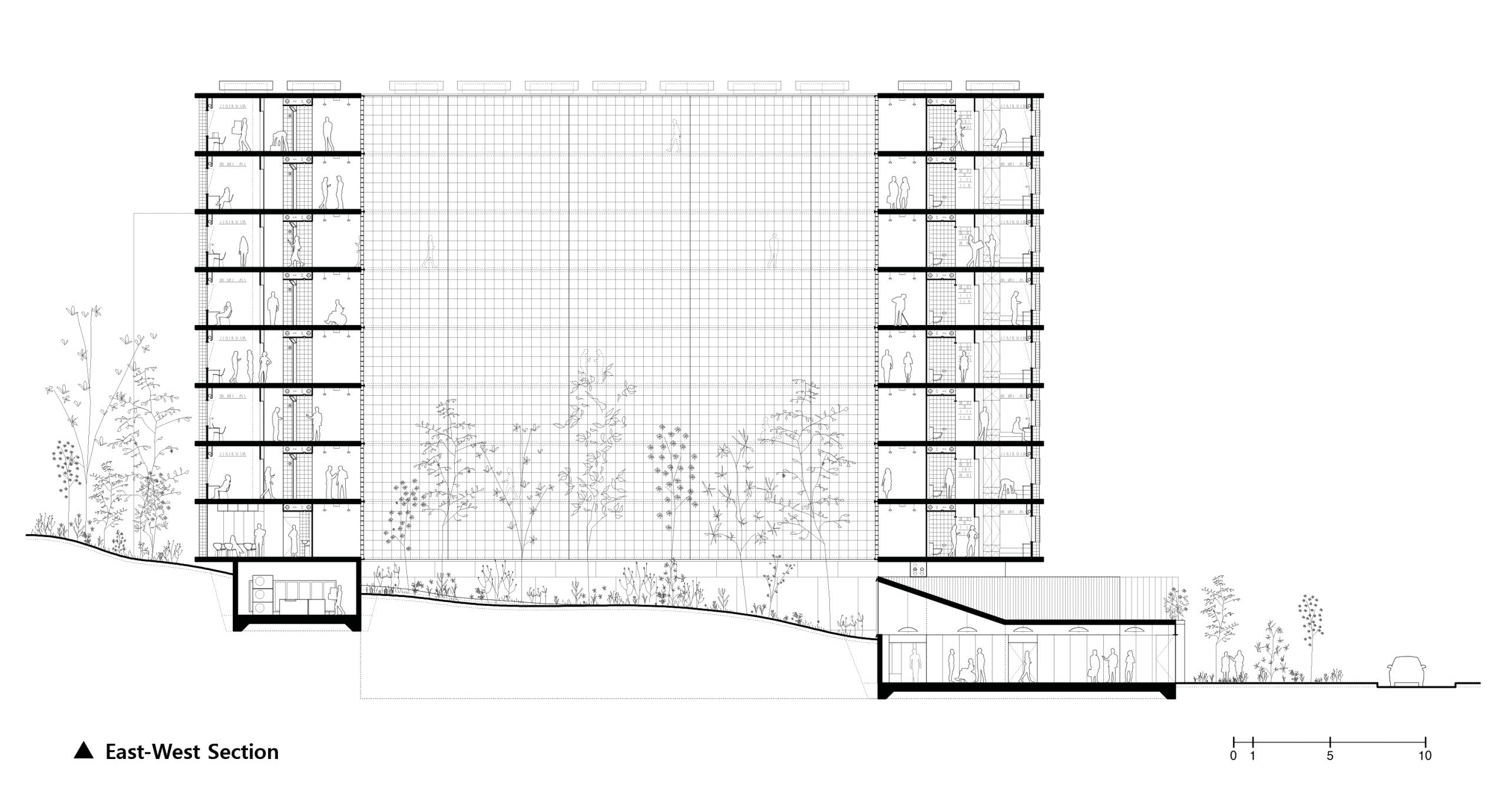
The proposal preserves the identity of Baebongsan Park as the primary site condition, using it as the basis for a courtyard-based dormitory extension. The building mass is organized around this central garden, maintaining alignment with surrounding campus geometry while maximizing site efficiency. A U-shaped configuration is introduced by setting back one side of the volume,
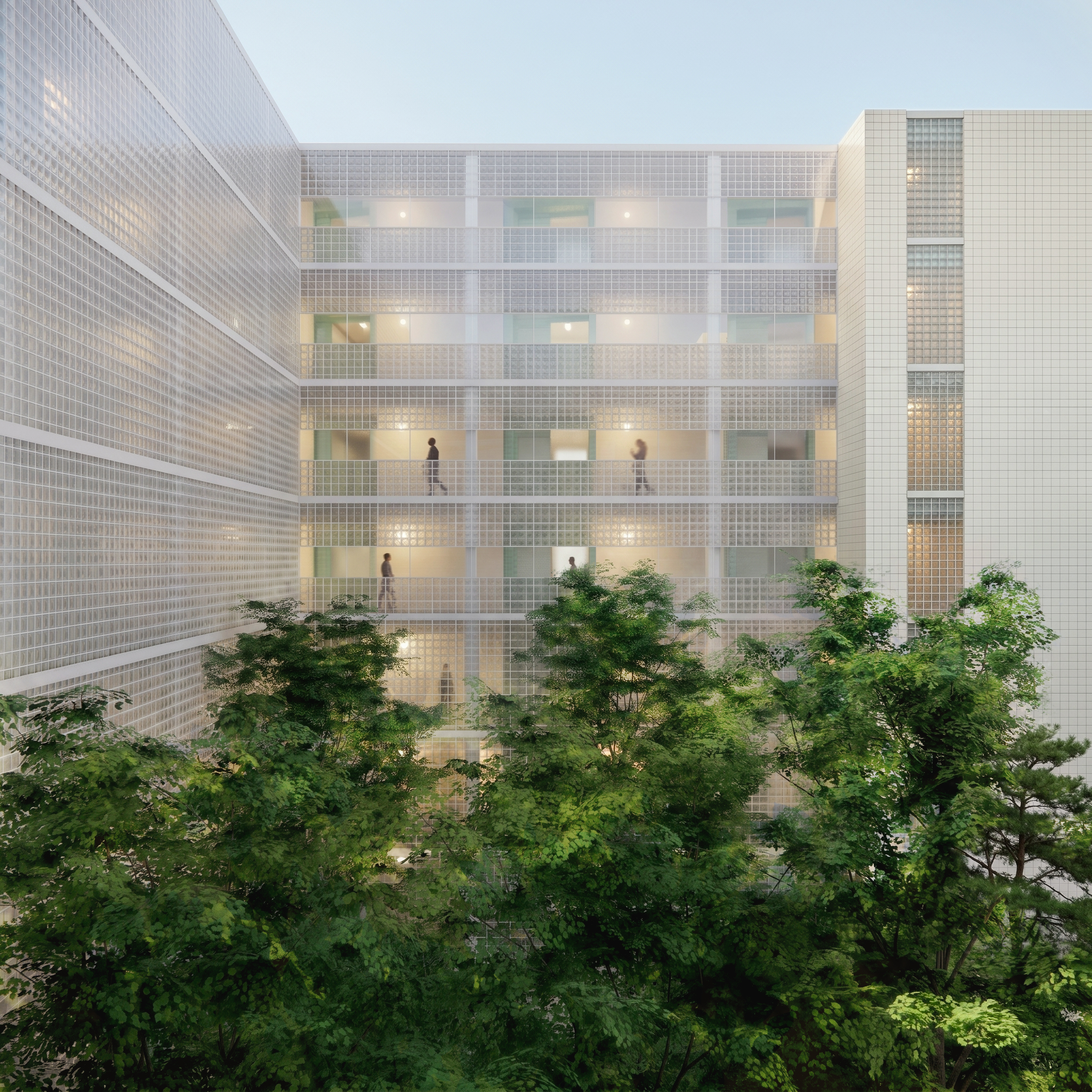
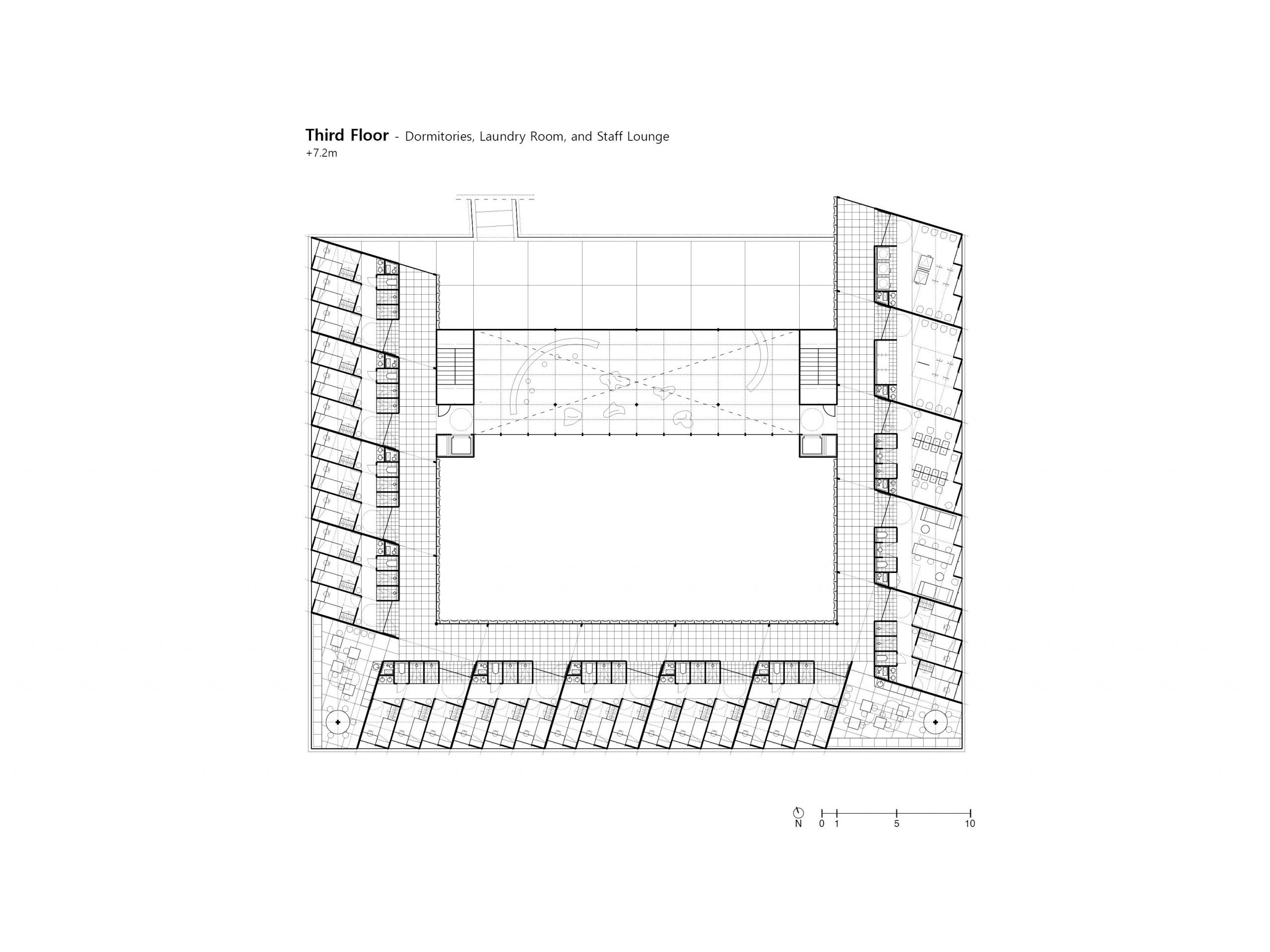
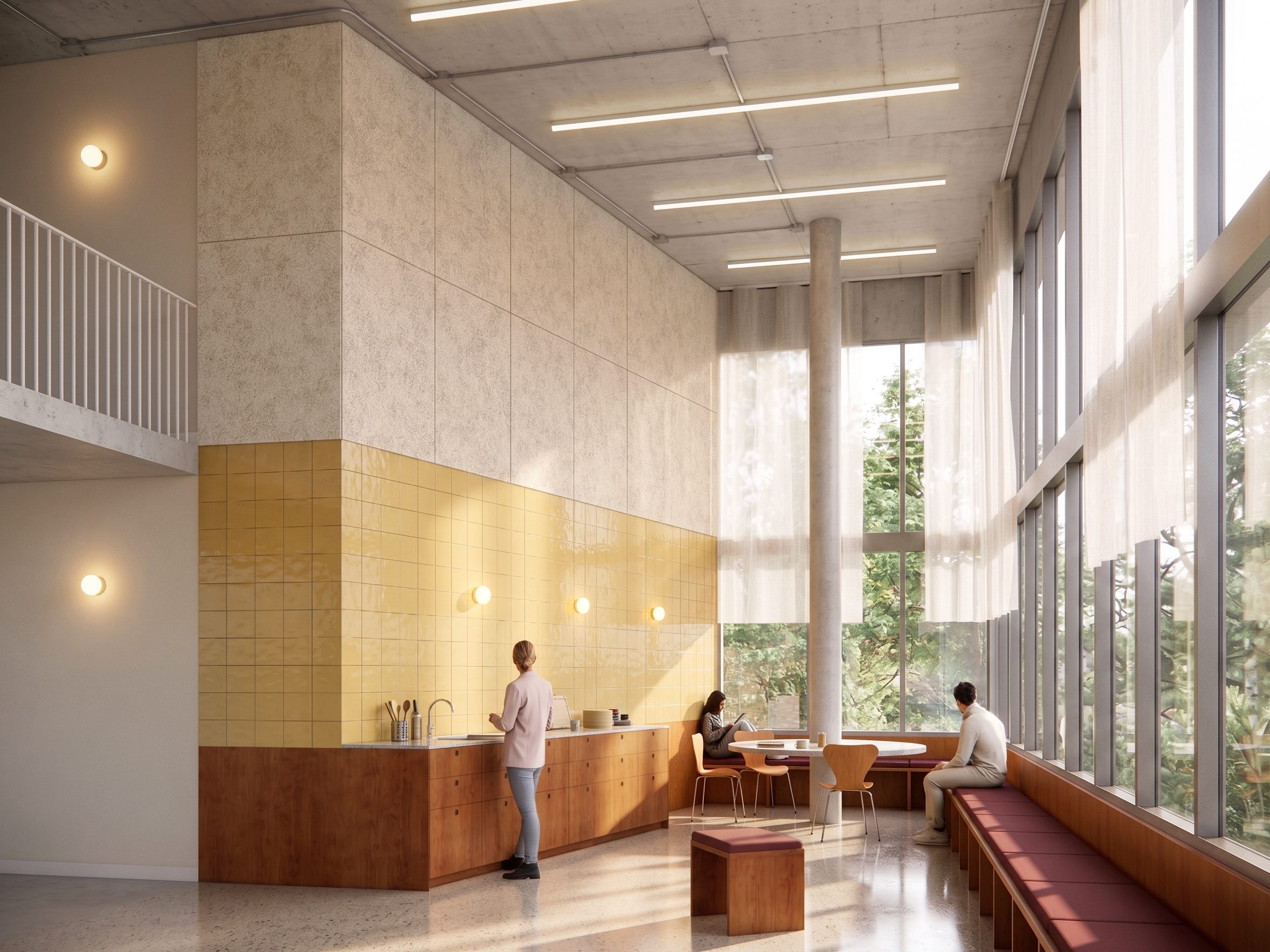
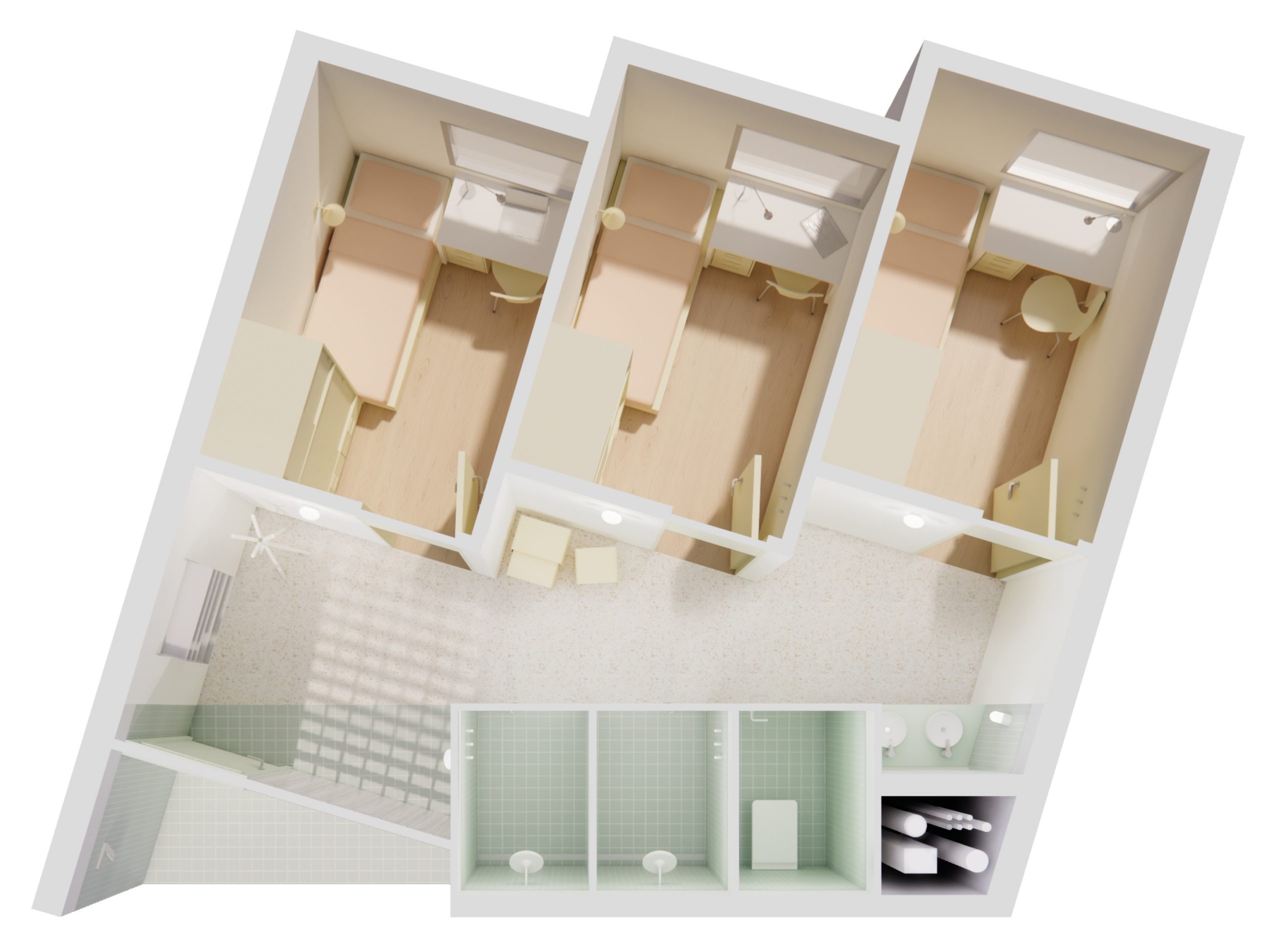
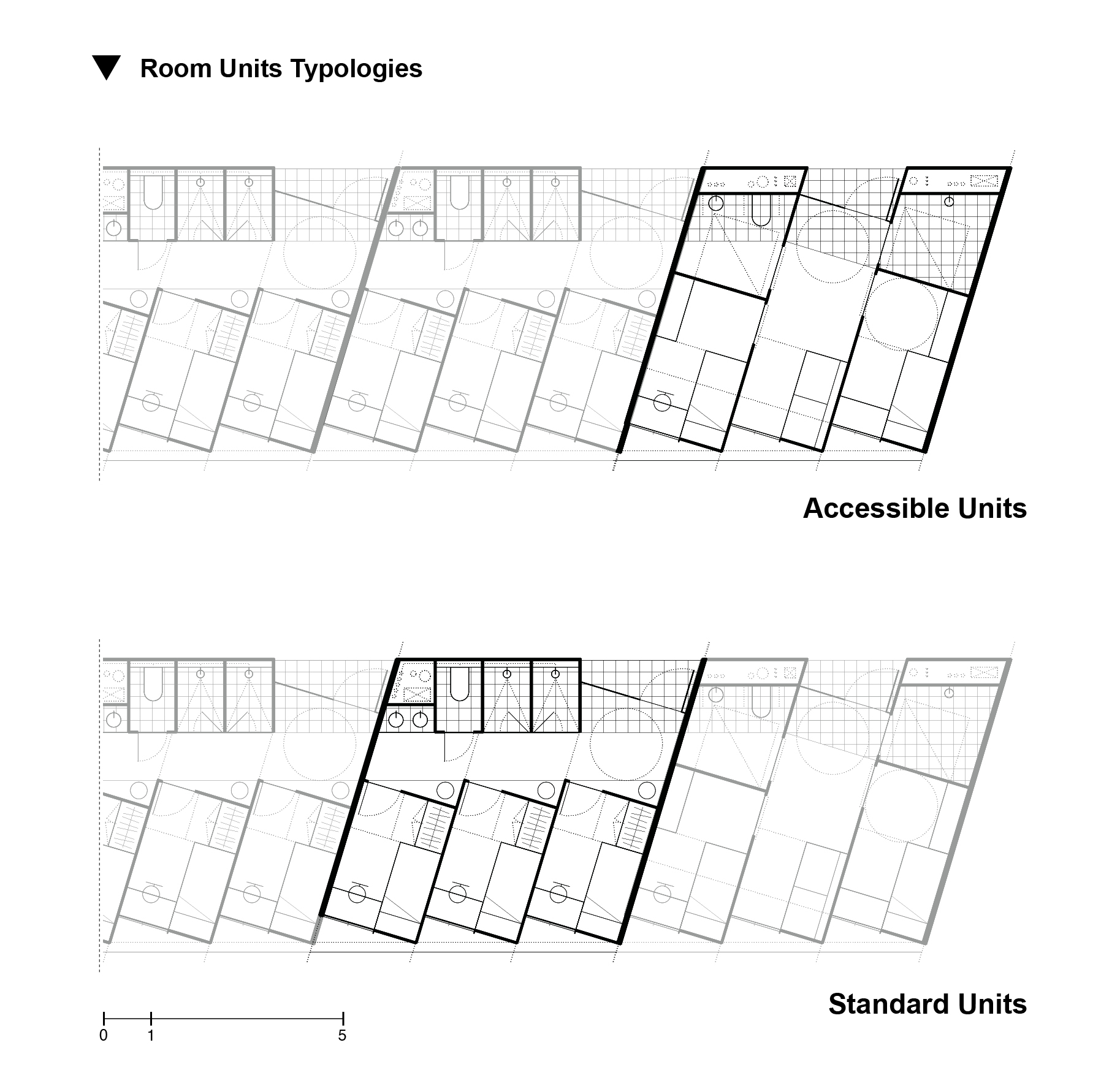
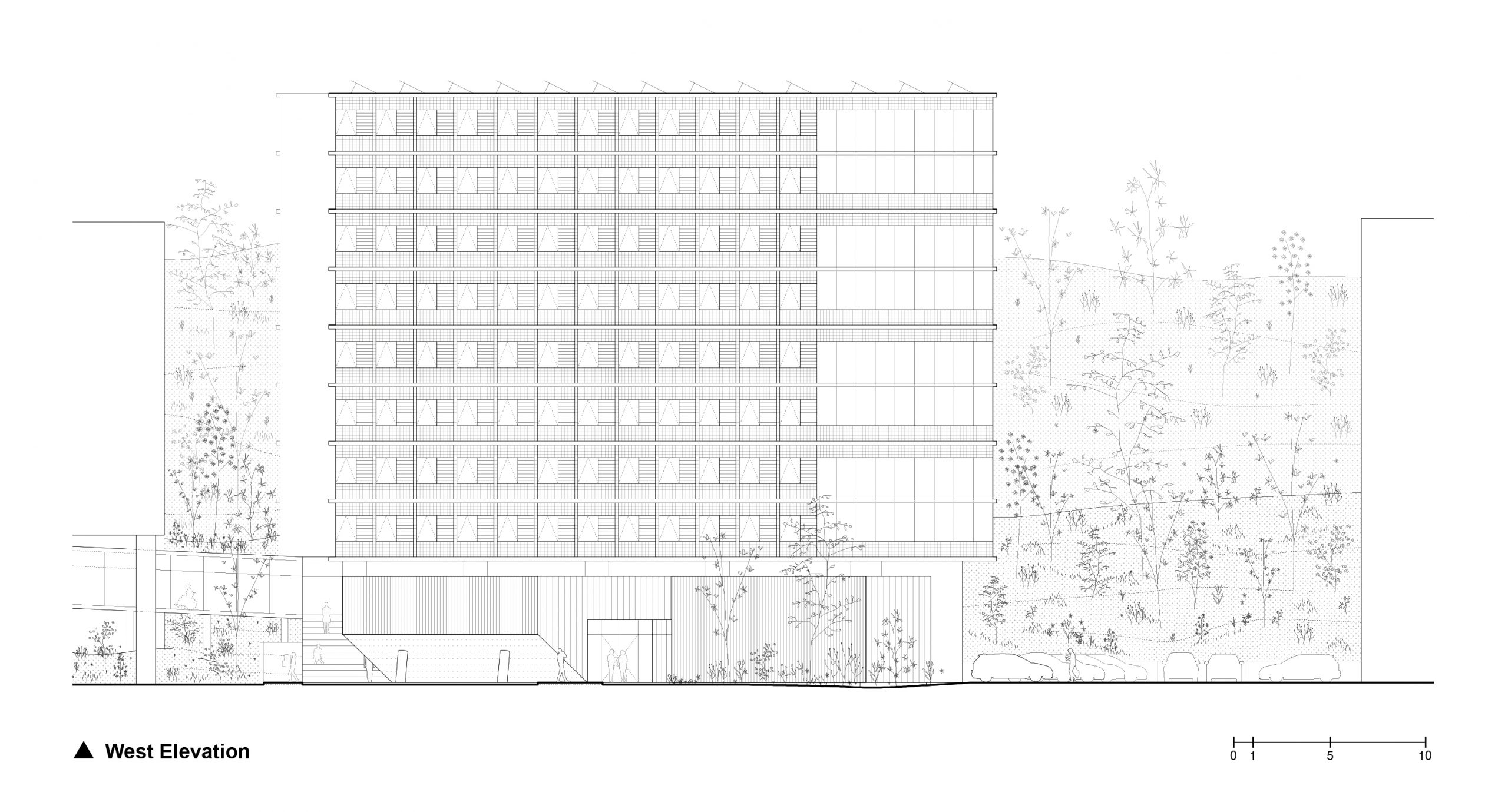
ensuring privacy while keeping the courtyard as a shared spatial and visual core. Residential units are placed on the exterior facade and angled to improve environmental performance, controlling East, South, and West solar exposure. Corner communal spaces are developed as double-height volumes, opening views toward both the campus and the park and reinforcing social interaction within a landscape-integrated residential framework.
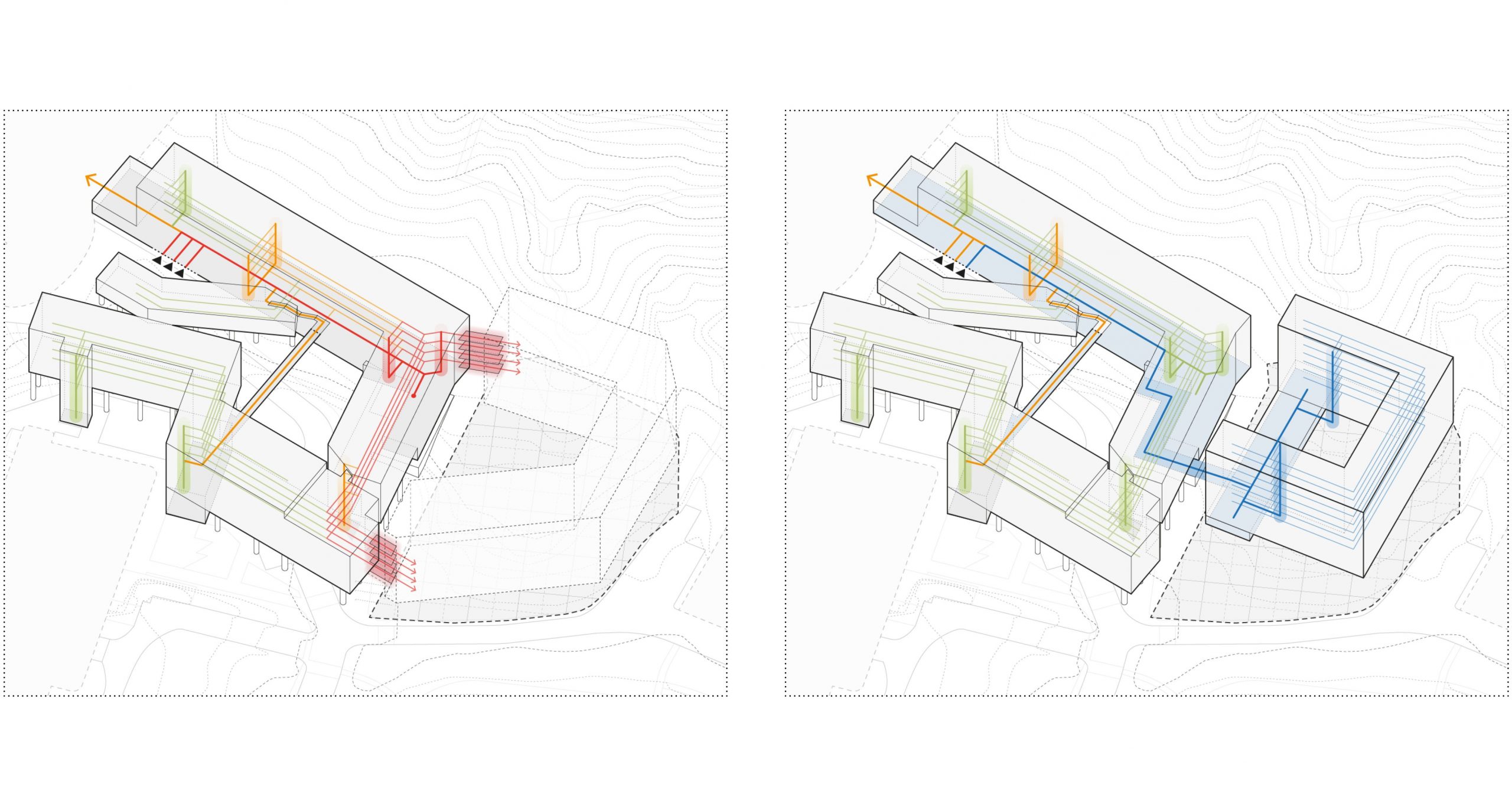
Proposed Extension, Connection and Access to the Old Dormitory
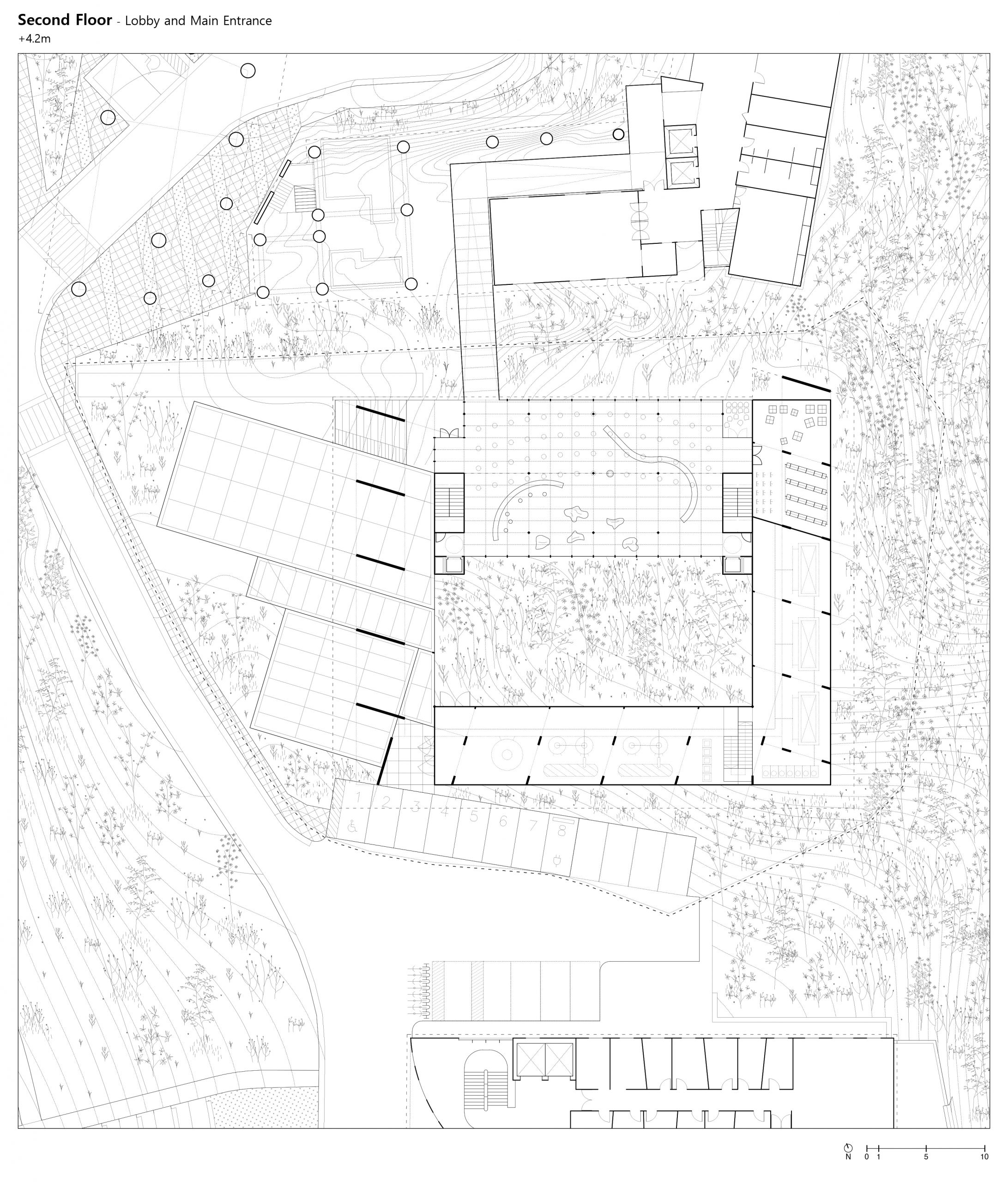
The connection to the existing dormitory is resolved at ground level through the first floor, using a secure entry and shared corridor to maintain full operational continuity. This avoids upper-level bridges, preventing disruption to existing residential areas and minimizing impact on current users.
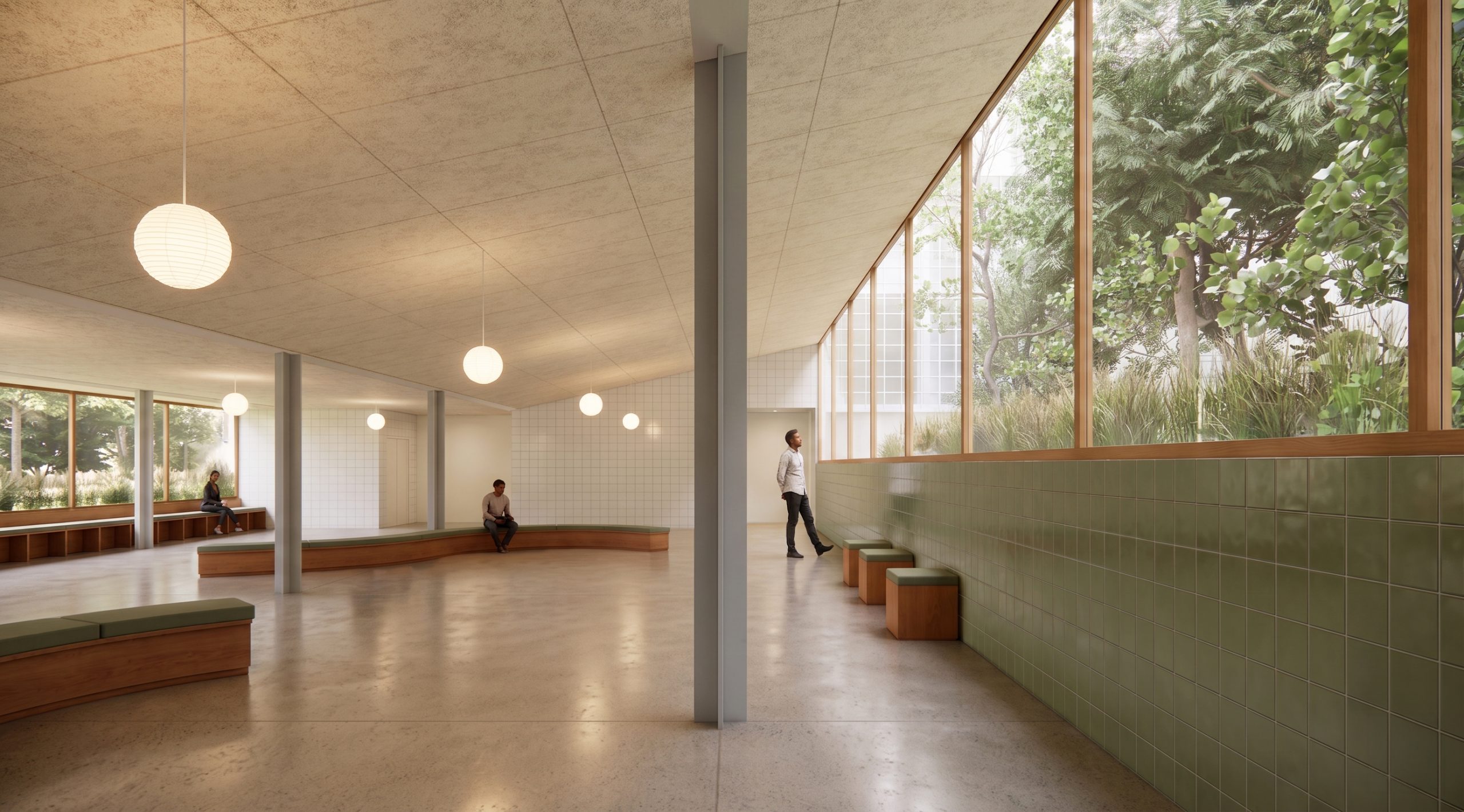
The lobby is conceived as a landscaped threshold, framed by vegetation and visually connected to the courtyard, it fosters an immediate relationship between the interior space and the landscape enhancing the biophilic quality of arrival.
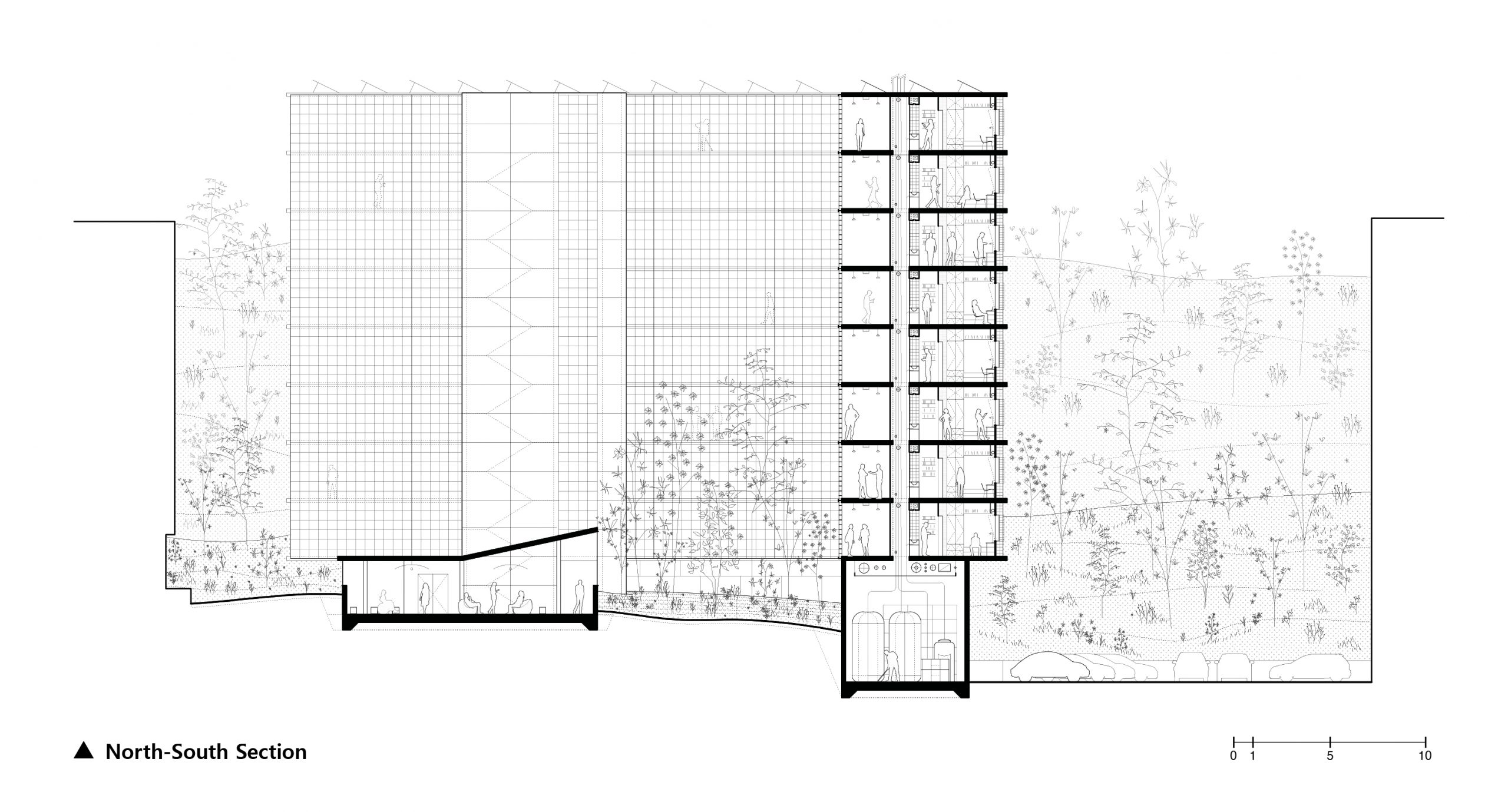
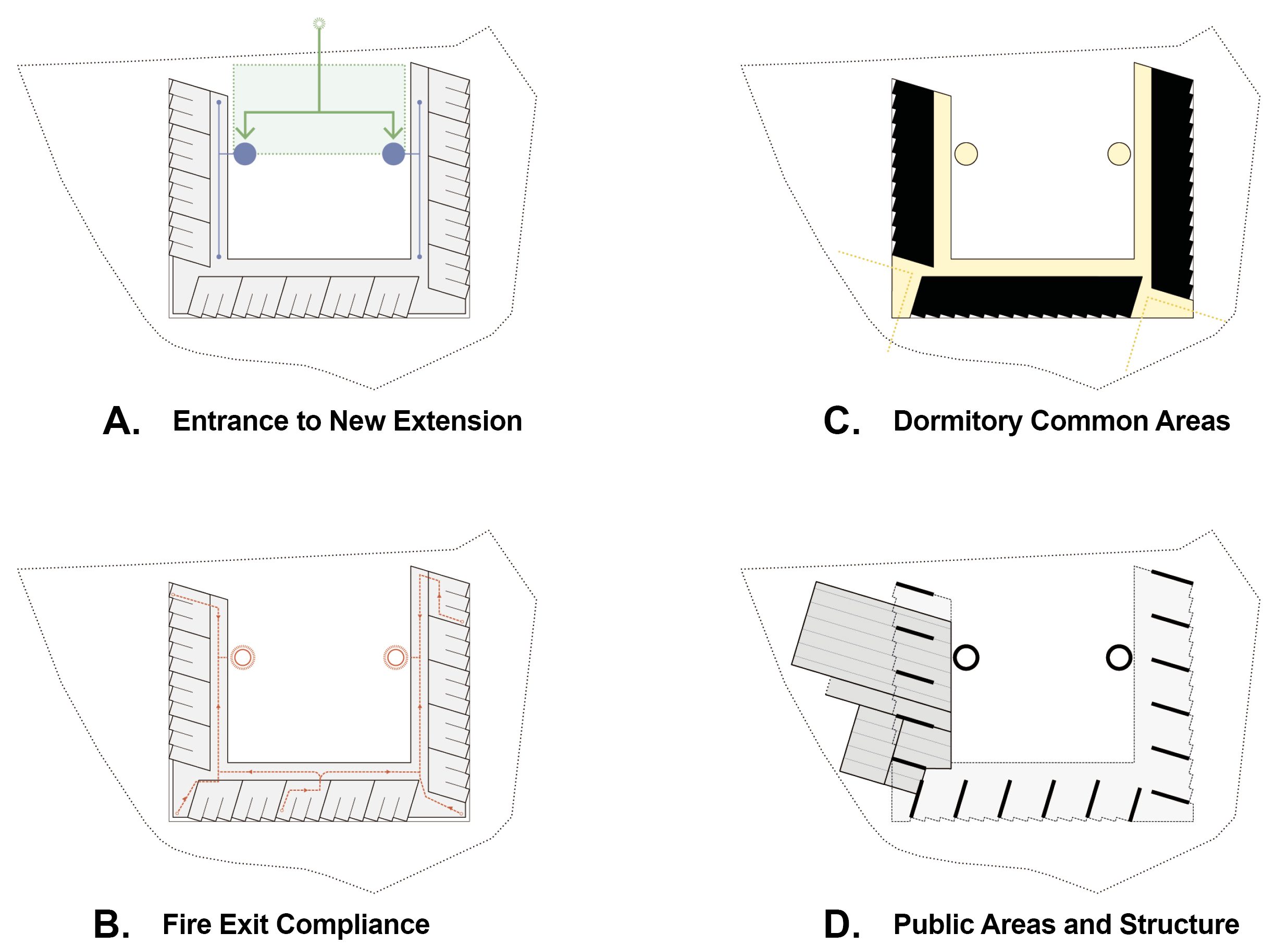
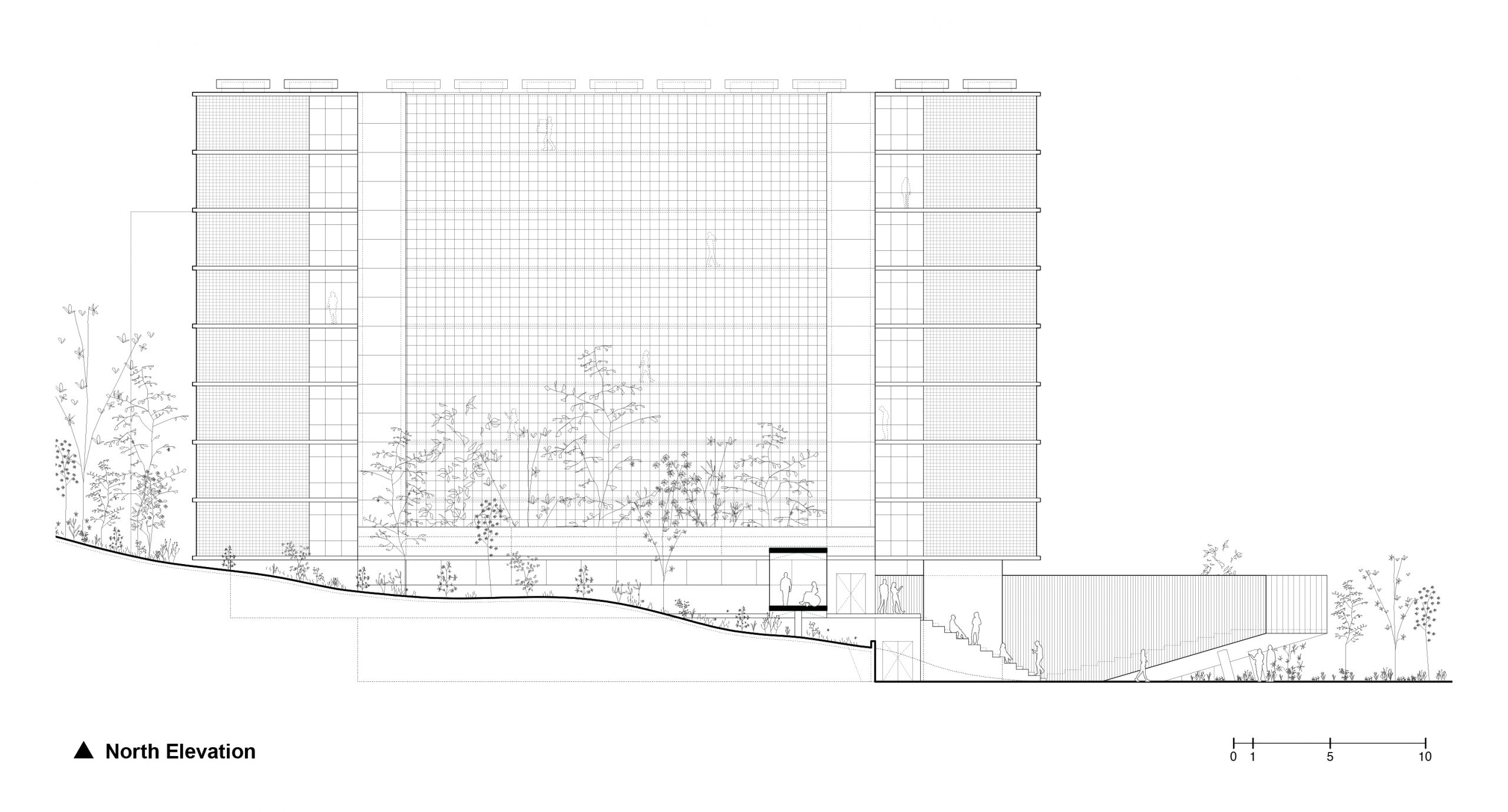
Access to the new extension is organized through the existing building’s first floor, leading users to a second-level lobby where panoramic views of the courtyard vegetation define the arrival experience. From this central space, two vertical circulation cores efficiently distribute movement throughout the building while reinforcing a clear organizational structure. This circulation strategy is coordinated with a symmetrical placement of evacuation stairs, ensuring that all dormitory units and corner communal spaces comply with the required 35-meter escape distance.
The sawtooth dormitory configuration opens the building corners into double-height communal areas shared between two residential levels, creating vertically connected social spaces with direct access from the units and framed views toward the surrounding landscape. At ground level, public and residential programs remain structurally integrated yet clearly differentiated, allowing public areas facing the western campus street to maintain an independent identity from the dormitory mass.
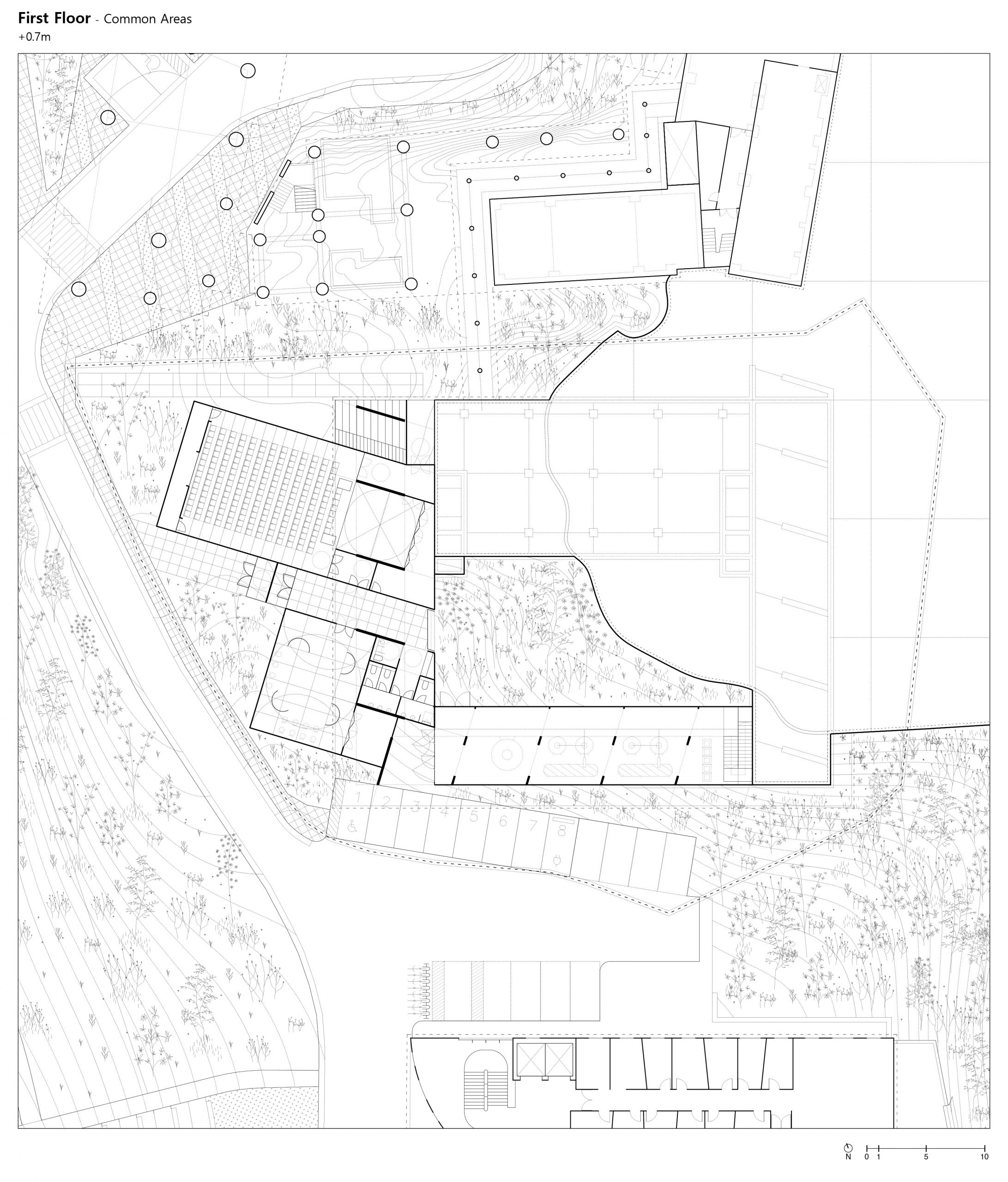
The project synthesizes ecological sensitivity, climate responsiveness, and social programming within a coherent architectural framework. Through its courtyard typology, sectional integration, and contextual alignment, the residence establishes a sustainable, functional, and architecturally unified living environment that reflects and strengthens the identity of the University of Seoul.
Climate-Responsive Design
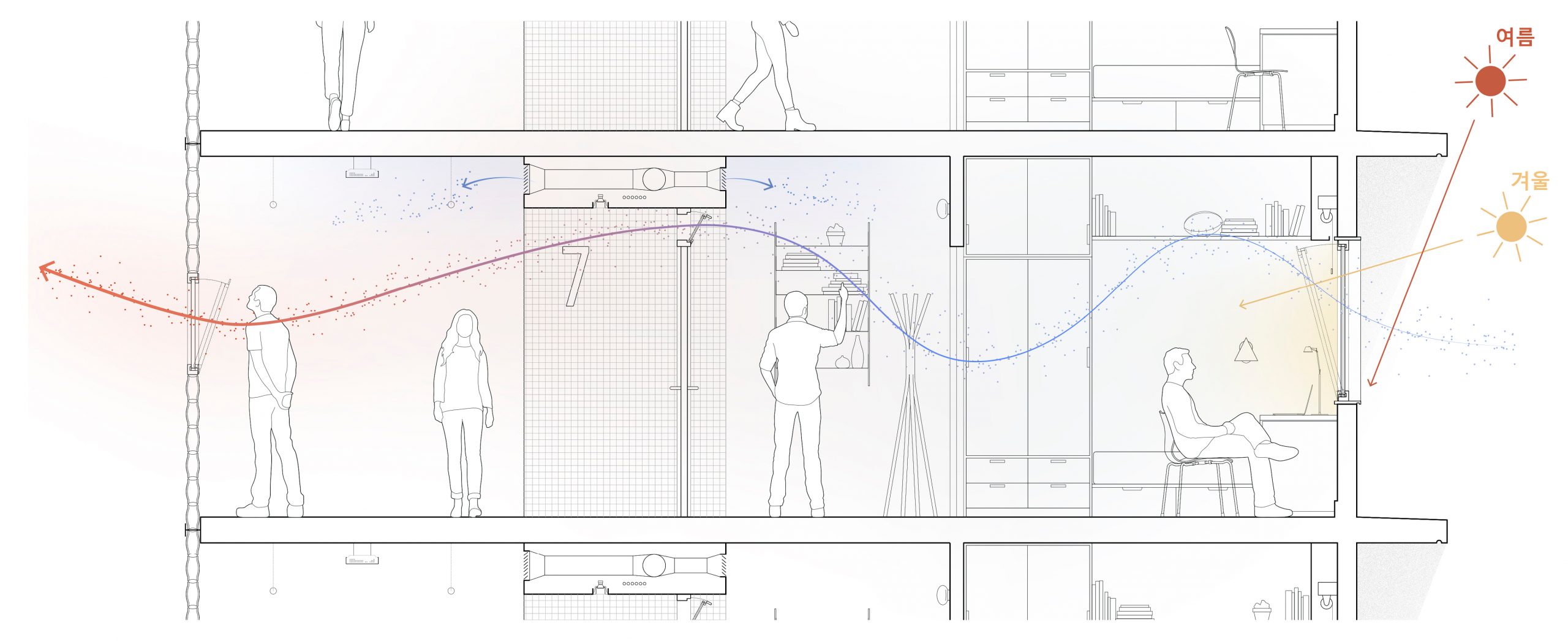
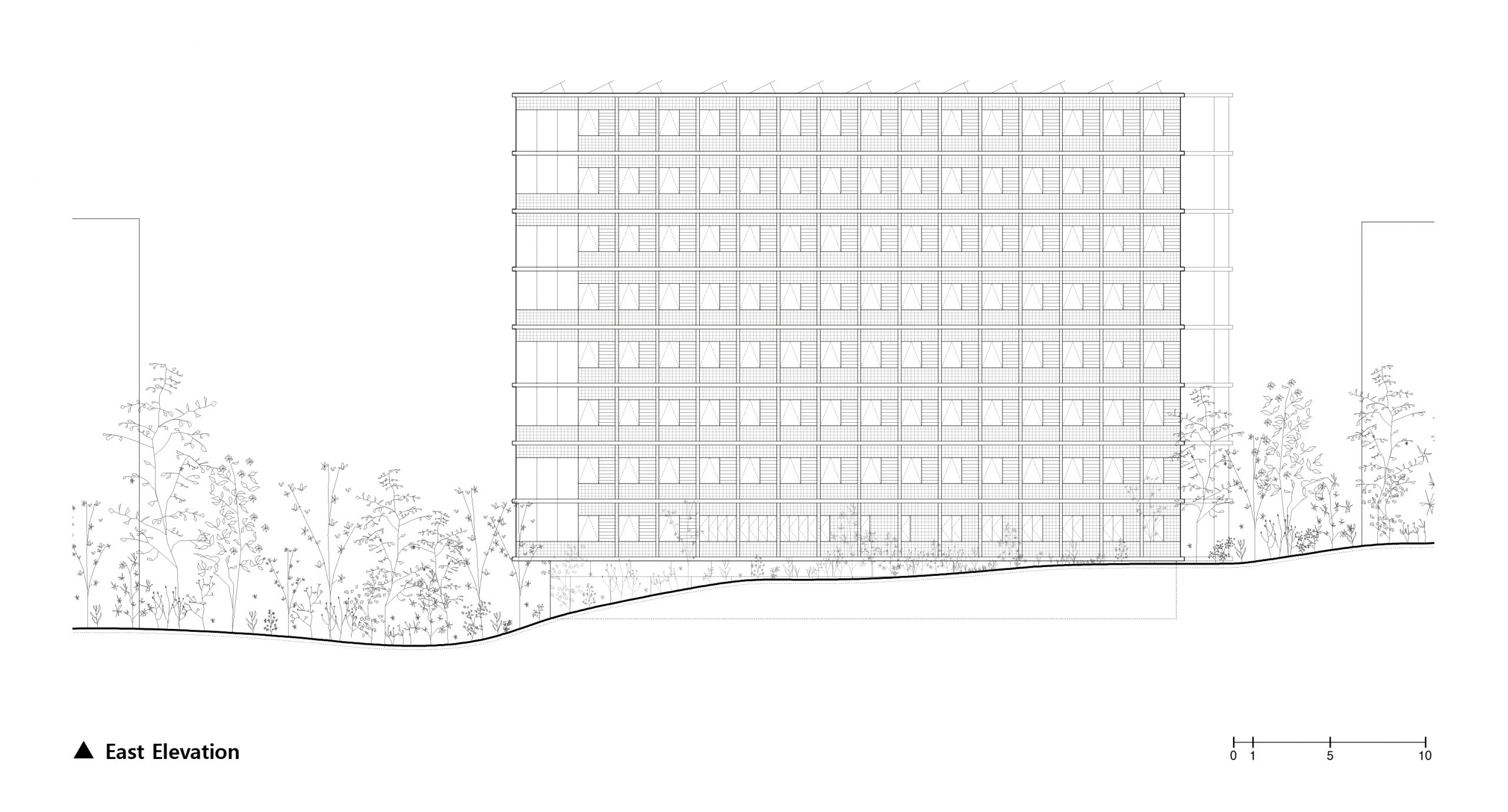
Environmental performance is a central driver of the design. Building orientation and façade articulation are strategically developed to optimize solar exposure and mitigate climatic extremes. Passive design strategies, including overhangs, shading devices, and carefully calibrated openings,
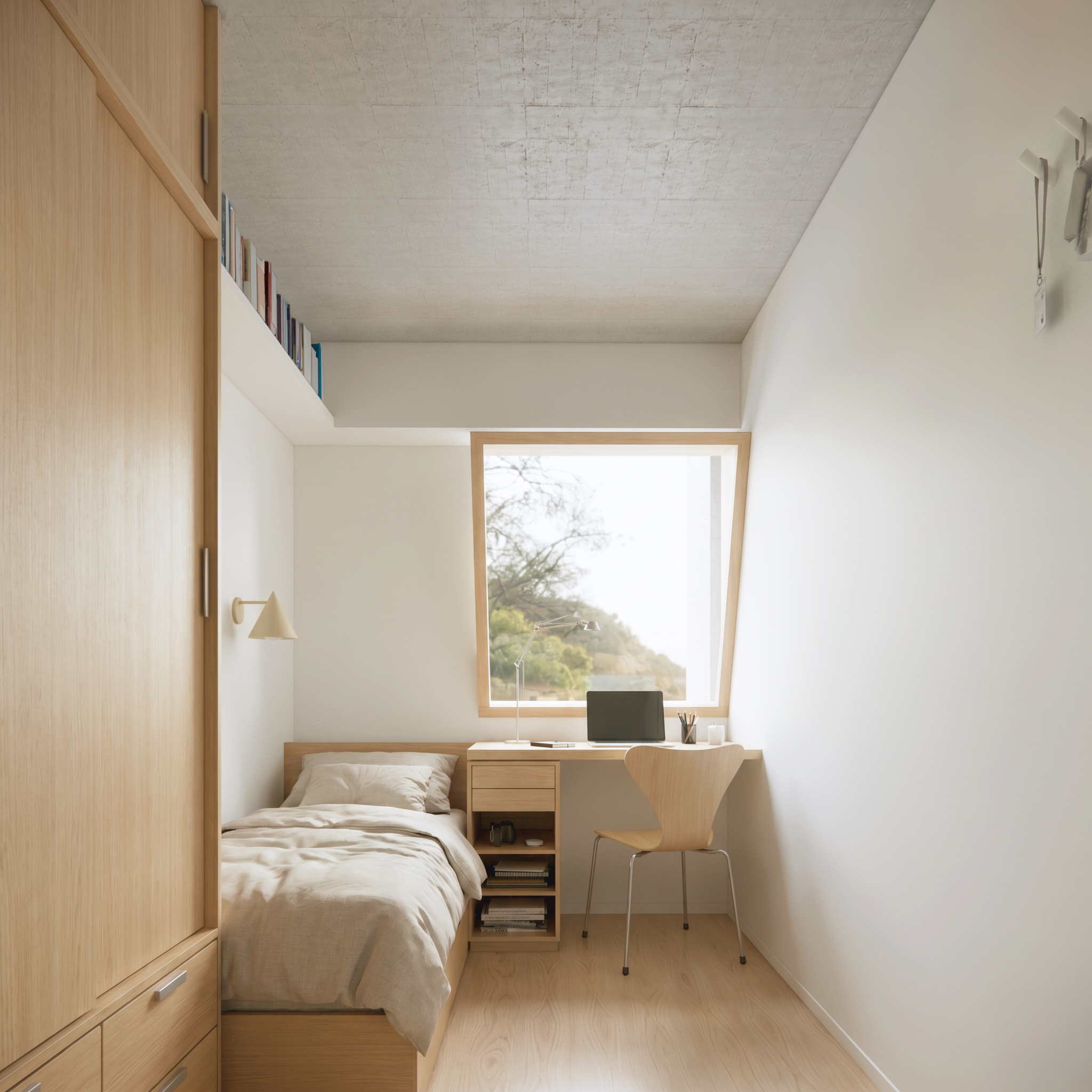
enhance winter solar gain while reducing summer heat accumulation. The stepped massing and courtyard configuration facilitate daylight penetration and cross-ventilation, addressing Seoul’s hot, humid summers, cold winters, and monsoon conditions through resilient detailing and durable exterior material systems.
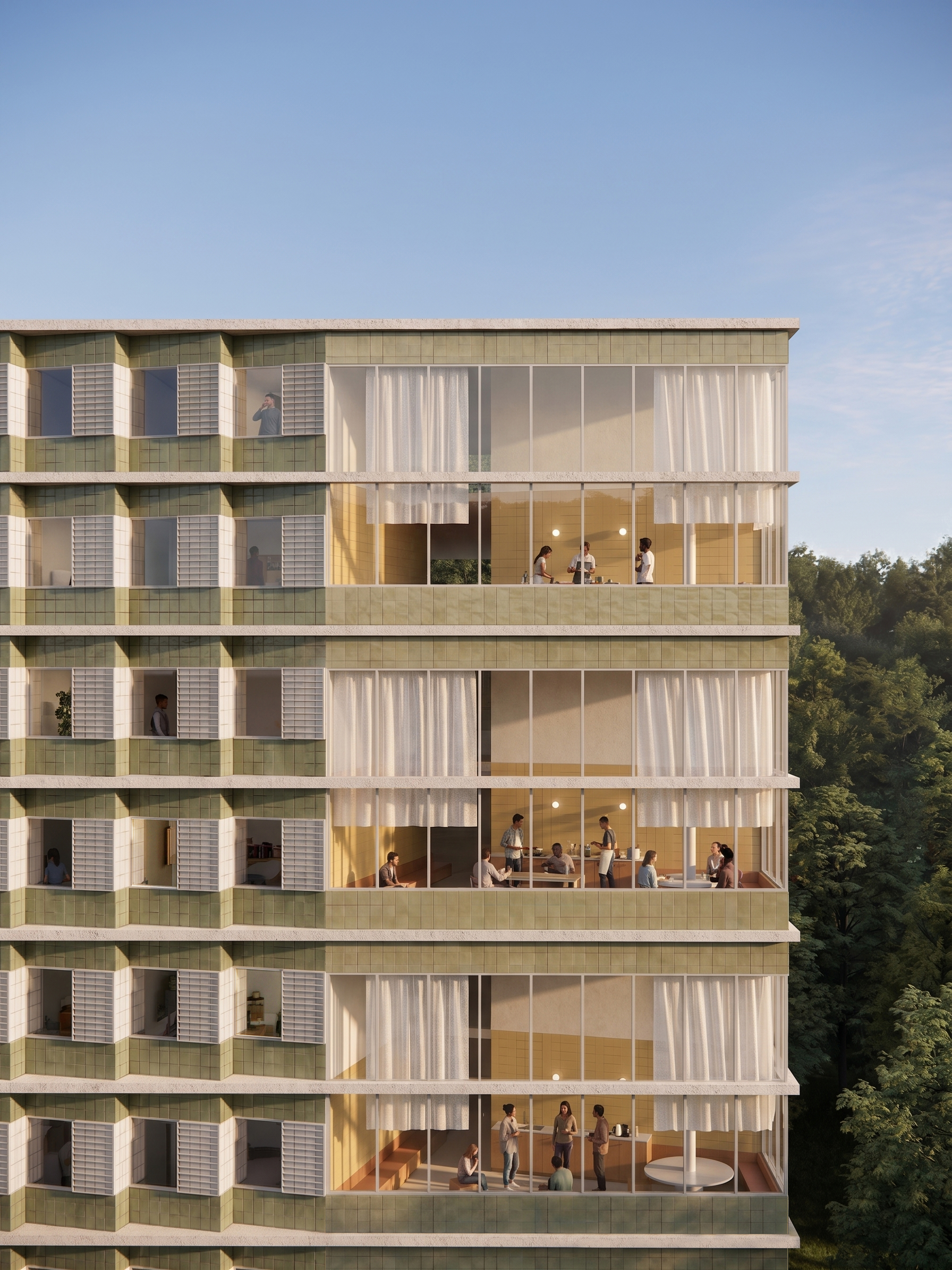
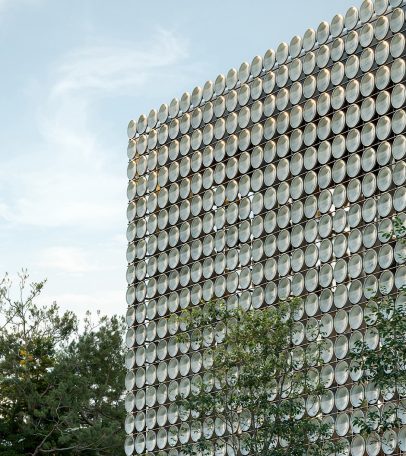
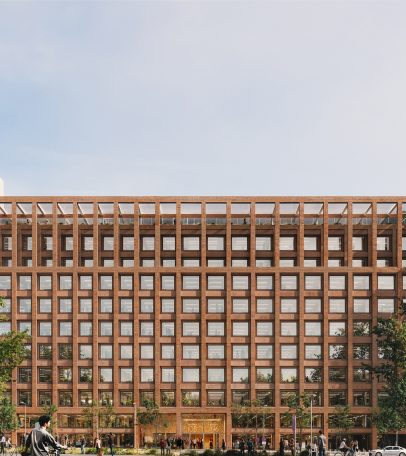
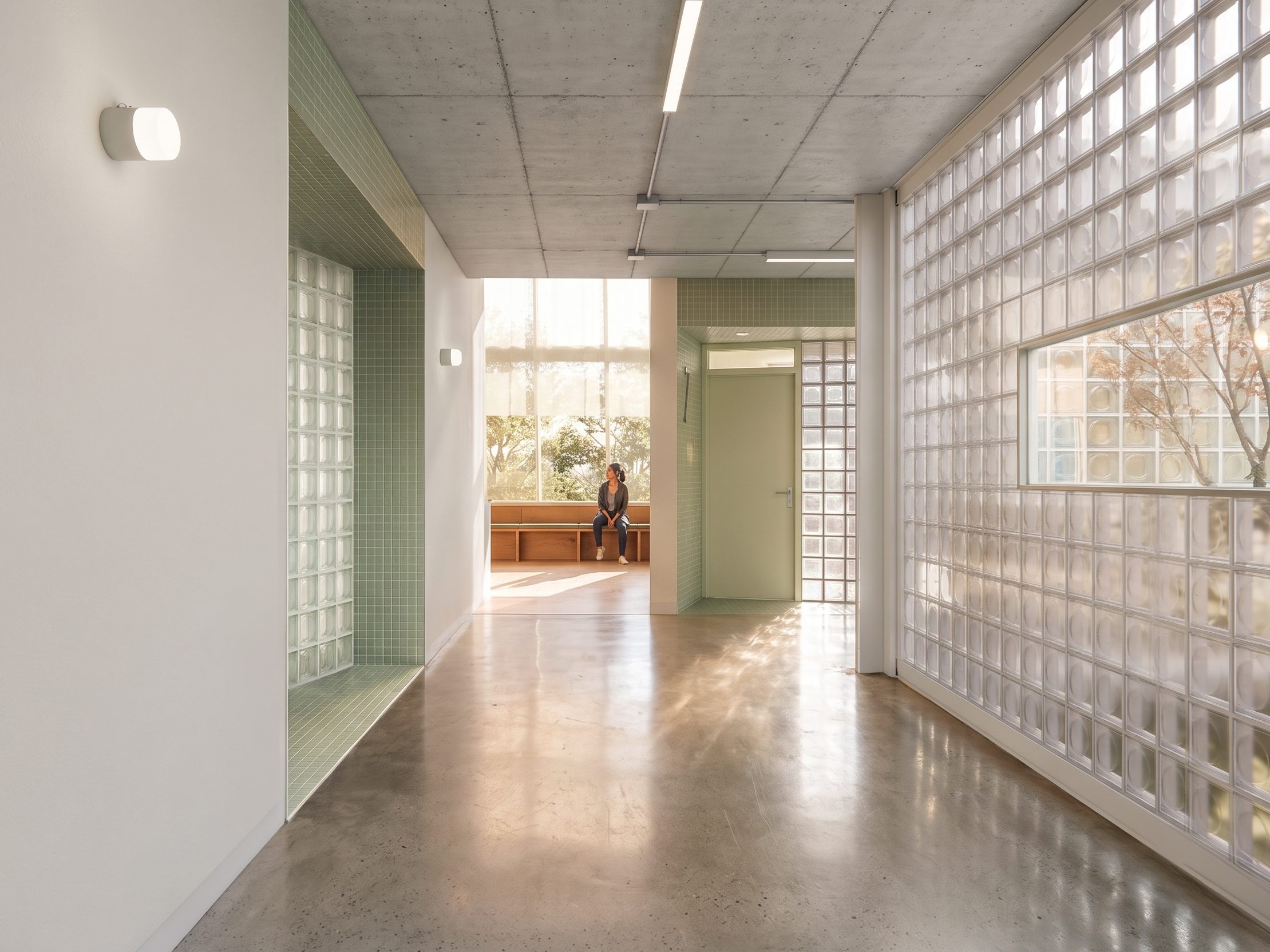
Material and facade strategies reinforce durability, sustainability, and contextual integration. The glazed terracotta, vitrified ceramic panels, exposed concrete, and translucent glass elements, balance longevity with environmental performance. Interior finishes prioritize robustness and cost efficiency through the use of polished concrete flooring, washable surfaces, and acoustic treatments in shared spaces.
Project Team
- Luis Collado
- Jose Luis de la Fuente
- Inés Fernández
- Álvaro Mesquida
- Gonzalo Rojas